

Introduction Of UAE
The United Arab Emirates has transported nearly 18,000 passengers since March 1 as part of coordinated efforts to maintain air connectivity and assist citizens and residents affected by recent regional developments.
Table of Contents
According to the Ministry of Economy and Tourism, approximately 17,980 passengers have been transported between March 1, 2026 and the present date through a combination of limited operational flights and special arrangements.
The ministry confirmed that more than 80 additional flights are scheduled in the coming days, with a total capacity exceeding 27,000 passengers, further strengthening the country’s response to evolving travel requirements.
Coordinated Response to Exceptional Circumstances
Officials explained that the limited operational flights were conducted specifically to facilitate the safe return of UAE citizens and residents who were affected by recent regional events and temporary airspace adjustments.
The measures were implemented in coordination with relevant authorities, aviation regulators, and national carriers to ensure passenger safety remains the highest priority. The UAE has activated contingency aviation protocols designed to balance operational continuity with precautionary security measures.
Authorities emphasized that these flights were carefully planned based on safety assessments, airspace clearances, and logistical feasibility. Each movement was conducted under strict monitoring to minimize risks while maintaining essential connectivity.
Aviation Sector Demonstrates Operational Resilience
The UAE’s aviation sector has long been regarded as one of the most strategically prepared in the region, supported by robust infrastructure and crisis management frameworks. Officials noted that the recent developments have once again highlighted the resilience of the country’s air transport ecosystem.
Despite heightened regional tensions, essential flight operations have continued under controlled and limited frameworks. The government’s approach has focused on gradual capacity restoration while continuously evaluating the security landscape.
The scheduled 80-plus additional flights are expected to significantly ease travel pressures and provide further flexibility for passengers awaiting repatriation or onward journeys.
Passenger Safety Remains Central Priority
The Ministry underscored that all operational decisions are guided by comprehensive safety assessments. Airspace coordination with regional and international aviation authorities remains ongoing to ensure compliance with global aviation standards.
Passengers have been advised to remain in close contact with their airlines for updates regarding flight schedules and any potential adjustments. Authorities reiterated that operational plans may be revised depending on evolving circumstances, but transparency and timely communication will remain central to the response strategy.
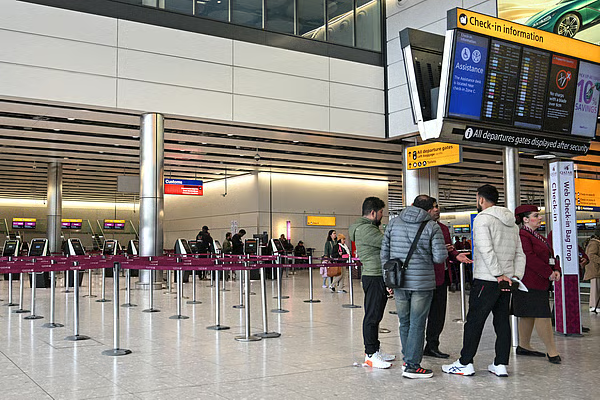
The government has also worked to streamline airport procedures for returning travelers, ensuring efficient processing while maintaining security checks and aviation safety protocols.
Economic and Tourism Stability Maintained
Officials from the Ministry reaffirmed that the country’s tourism and economic sectors remain stable. The UAE continues to monitor international travel patterns and market demand, with contingency plans in place to support both inbound and outbound travel activity.
The transportation of nearly 18,000 passengers since March 1 demonstrates the UAE’s ability to respond rapidly to unexpected disruptions while safeguarding public confidence.
Authorities highlighted that business continuity frameworks across airports, airlines, and tourism operators have been activated to minimize disruption to commercial operations. Hotels, ground transport services, and related sectors remain operational and aligned with national coordination efforts.
Strategic Planning and Supply Chain Assurance
In parallel with aviation management, federal authorities have confirmed that essential supply chains remain intact. Air freight operations continue under structured scheduling, ensuring that trade flows and logistics networks remain stable.
The integration between civil aviation authorities, economic planners, and emergency management bodies has been central to maintaining equilibrium during this period. Officials described the response as measured, data-driven, and aligned with long-standing national preparedness strategies.
Ongoing Monitoring and Future Outlook
The Ministry of Economy and Tourism stated that operational updates will continue to be shared as more flights are deployed and capacity increases. The additional 80 flights, with capacity exceeding 27,000 passengers, are expected to further alleviate travel backlogs and restore greater mobility for affected individuals.
Authorities stressed that the situation remains dynamic, and all relevant agencies are closely monitoring developments to ensure swift adaptation where necessary.
The UAE’s broader objective, officials noted, is to maintain national stability while ensuring that citizens and residents are supported through practical, efficient solutions. Aviation remains a cornerstone of the country’s global connectivity, and safeguarding that connectivity—even in challenging circumstances—remains a strategic priority.
Public Advisory
Residents and travelers are encouraged to obtain information from official government channels and airline communications. The Ministry reiterated the importance of avoiding speculation and relying solely on verified updates.
As nearly 18,000 passengers have already been transported and thousands more are scheduled to travel in the coming days, authorities expressed confidence in the country’s ability to navigate the current situation effectively.
The UAE’s coordinated aviation response underscores its commitment to operational readiness, economic resilience, and above all, the safety and wellbeing of its people.