

A dramatic escalation in tensions between the United States and Iran has taken shape with Washington’s announcement of a naval blockade targeting Iranian maritime traffic. The move, which came into force on April 13, 2026, signals a shift from fragile diplomacy to direct economic and military pressure—one that could reverberate far beyond the Middle East. Naval
Table of Contents
A Historic Tool Reemerges
Naval blockades are among the oldest instruments of warfare, used for centuries to cripple adversaries without immediate ground conflict. From the Peloponnesian War to the World War I, control of sea routes has often determined the outcome of conflicts. Naval
In essence, a blockade prevents ships from entering or leaving a targeted country’s ports, cutting off trade, military supplies, and economic lifelines. While not always classified as full-scale war, it is widely seen as an aggressive act with far-reaching consequences. Naval
Why the US Has Imposed the Blockade
The current blockade follows the collapse of high-level negotiations between Washington and Tehran—talks that had raised cautious hopes for de-escalation. Instead, both sides have hardened their positions.
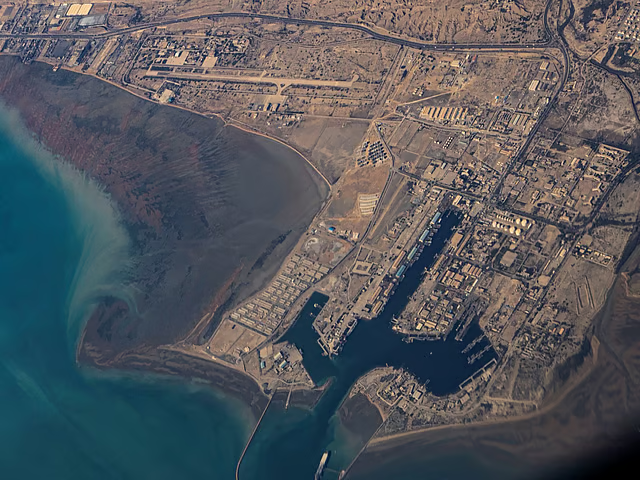
At the center of the dispute lies the Strait of Hormuz, one of the world’s most critical النفط chokepoints, through which roughly 20% of global oil shipments pass. In recent weeks, Iran had tightened its grip over the strait, with reports of attacks on vessels, informal tolls, and threats of further disruption.
The US, citing threats to global commerce and energy security, has now moved to block shipping to and from Iranian ports while allowing traffic between other nations to continue. Naval
Immediate Market Shock
The announcement has already sent shockwaves through global energy markets. Oil prices surged sharply in early trading, reflecting fears of supply disruptions in a region that remains central to the world’s النفط supply chain.
This volatility underscores a simple reality: even a “targeted” blockade in the Gulf can ripple across continents. Countries dependent on imported energy—particularly in Asia and Europe—are likely to feel the impact through higher fuel costs, inflationary pressure, and economic uncertainty.
Strategic and Political Implications
The blockade marks a decisive pivot toward coercive strategy. Analysts widely describe it as an escalation, raising the risk of broader military confrontation in an already volatile region.
Critics within the United States argue the move could backfire—failing to deter Iran while increasing the likelihood of retaliation. Historically, blockades have often provoked countermeasures, whether through asymmetric warfare, proxy conflicts, or attacks on shipping lanes.
The situation also carries domestic political weight. Rising fuel prices could become a key issue ahead of US midterm elections, placing additional pressure on policymakers.
Why It Matters Globally
Even though the blockade is aimed at Iran, its implications are global:
- Energy Security: Any disruption in the Gulf can tighten global oil supply and drive sustained price increases.
- Trade Flows: Shipping delays and rerouting could affect everything from consumer goods to industrial materials.
- Regional Stability: The move risks drawing in other regional and global powers, complicating an already fragile geopolitical landscape.
A Pattern Repeating Itself
History suggests that naval blockades rarely remain contained. During the Cuban Missile Crisis, even a limited “quarantine” brought the world to the brink of nuclear war. Similarly, blockades during both world wars triggered humanitarian crises and reshaped global alliances.
The current situation, while different in context, echoes a familiar pattern: economic pressure escalating into strategic confrontation.
What Comes Next
The path forward remains uncertain. Diplomatic channels appear strained, and rhetoric on both sides has hardened. While the United States has indicated it may not prioritize renewed negotiations, sustained economic pressure could eventually force a recalibration—either toward talks or further escalation.
For now, the blockade represents a high-stakes gamble. It aims to contain Iran’s influence and secure global shipping routes, but it also risks intensifying one of the world’s most sensitive geopolitical flashpoints.
In global politics, controlling the sea has always meant controlling the game. The question now is whether this move will stabilize the region—or push it closer to a wider conflict.