

Israel The latest round of high-stakes negotiations involving the United States and Iran ended without a breakthrough, and the reactions that followed exposed just how far apart the key players remain. While diplomats left the table without agreement, statements from Washington, Tehran, Islamabad and Tel Aviv made clear that the divide is not only diplomatic — it is strategic and deeply rooted. Israel
Table of Contents
Washington: Firm Demands, No Room for Ambiguity
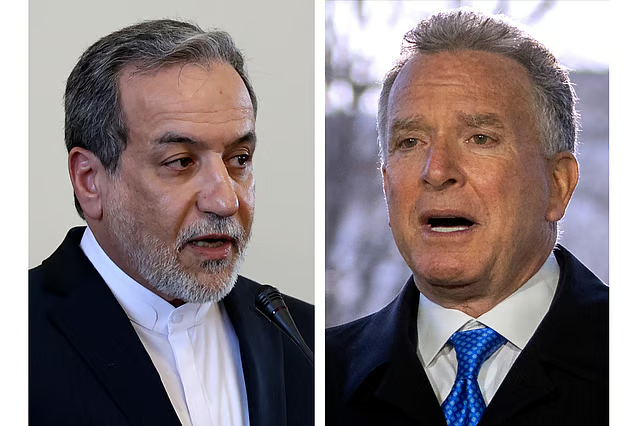
From Washington, the message was unequivocal. US Vice President JD Vance emphasized that any agreement hinges on Iran making an “affirmative commitment” not to pursue nuclear weapons. He described the US proposal as its “final and best offer,” placing the responsibility for the next step squarely on Tehran.
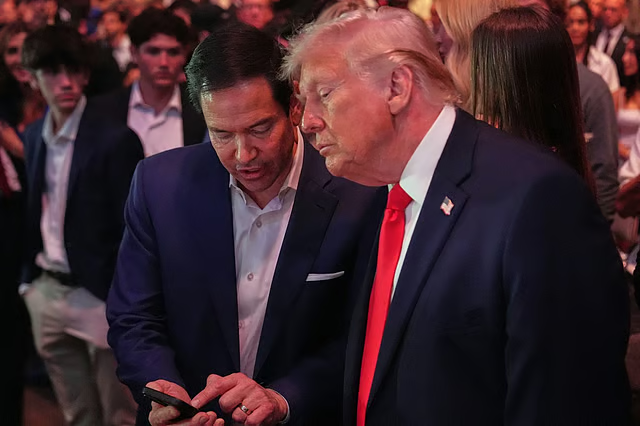
US President Donald Trump adopted an even more assertive tone, suggesting that the United States already holds a position of strength. His remarks downplayed the urgency of reaching a deal, reinforcing a hardline posture that prioritizes leverage over compromise.
Together, these statements signal a negotiating strategy focused on immediate, concrete guarantees rather than incremental progress.
Tehran: Rejection and Strategic Patience
Iranian officials, however, presented a starkly different narrative. Foreign Ministry spokesman Esmaeil Baghaei dismissed US demands as “unreasonable,” arguing that Washington’s expectations — particularly regarding nuclear restrictions — leave little room for balanced negotiation.
Tehran framed the collapse of talks as the result of fundamental disagreements rather than tactical missteps. Iranian leadership and state media stressed that meaningful diplomacy cannot be rushed, portraying negotiations as a gradual process requiring multiple rounds.
This approach reflects a broader strategy of patience, signaling that Iran is unwilling to concede under pressure and remains wary of US intentions.
Pakistan: Keeping the Door Open
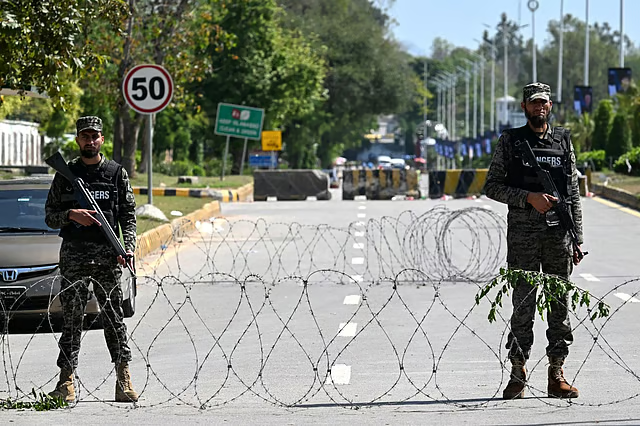
Amid the escalating rhetoric, Pakistan positioned itself as a stabilizing force. Foreign Minister Ishaq Dar called on all sides to uphold the fragile ceasefire and emphasized the importance of continued dialogue.
Islamabad’s response highlights its role as a facilitator rather than a direct stakeholder, seeking to prevent further escalation while encouraging diplomatic engagement. The measured tone stands in contrast to the sharper exchanges between Washington and Tehran.
Israel: Focus on Continued Pressure
Israel’s response underscored a different priority — maintaining pressure regardless of diplomatic outcomes. Prime Minister Benjamin Netanyahu signaled that military operations remain ongoing and that the broader campaign is far from complete.
His remarks reflect skepticism toward negotiations and a preference for sustained strategic pressure, reinforcing the idea that diplomacy alone may not shape the region’s trajectory.
Iran’s Domestic Perspective: Deep-Rooted Distrust
Within Iran, senior leadership echoed longstanding concerns about US reliability. Parliament Speaker Mohammad Bagher Ghalibaf pointed to past “broken promises,” highlighting a persistent trust deficit that continues to shape Tehran’s negotiating stance.
This internal narrative strengthens resistance to external pressure and complicates efforts to reach a swift agreement.
A Widening Gap
Taken together, the reactions reveal more than just a failed round of talks — they expose fundamentally different visions of how diplomacy should proceed. The United States is pressing for immediate, verifiable commitments, while Iran is advocating for a longer, more flexible process. Meanwhile, Israel remains focused on military pressure, and Pakistan is working to keep diplomatic channels open.
The result is a widening gap in expectations, where each side appears to be operating on a different timeline and strategic framework. Unless those underlying differences are addressed, future negotiations risk facing the same outcome — prolonged dialogue without resolution.