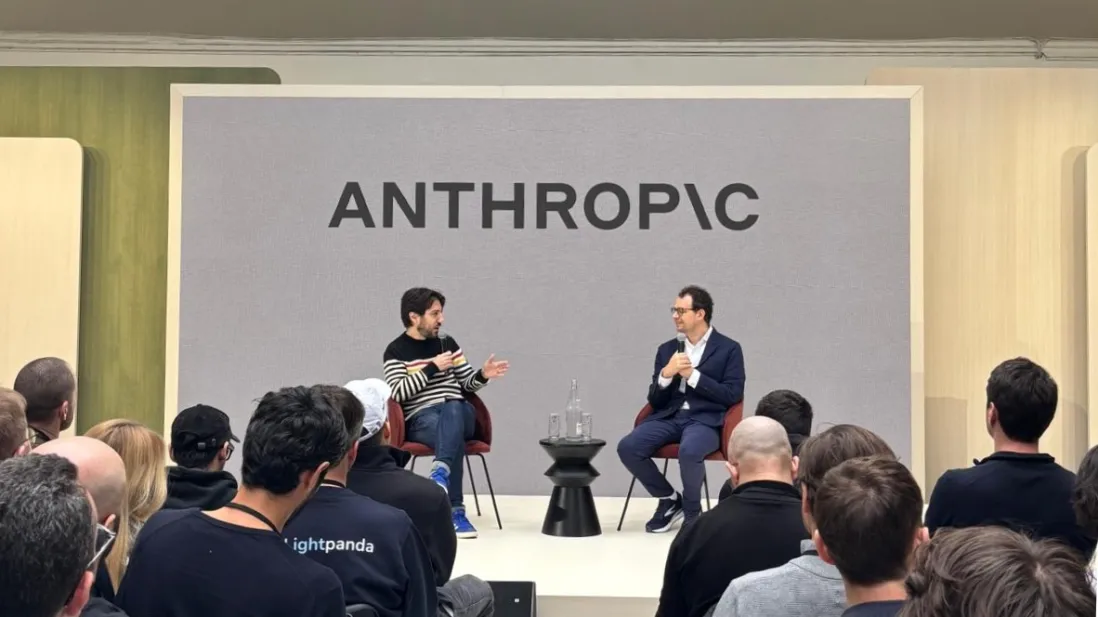



Anthropic, the company behind the Claude AI chatbot, has filed for an initial public offering (IPO) in the United States, revealing extraordinary revenue growth alongside a reported $80.7 billion net loss for the first half of 2026. The development marks a major milestone for the artificial intelligence industry as investors prepare to evaluate one of the leading competitors in the AI market.
The Anthropic IPO filing was submitted to the US Securities and Exchange Commission (SEC) on October 26, 2026. The company has applied to list its shares on the Nasdaq stock exchange under the ticker symbol ANT. However, the proposed share price, number of shares to be offered, and total fundraising target have not yet been disclosed.
According to the company’s filing, Anthropic generated $16.3 billion in revenue during the first six months of 2026, compared with approximately $1.2 billion in the same period last year. Despite this rapid expansion, the company continues to face substantial financial, operational, and AI safety challenges.
Table of Contents
1. What Is the Anthropic IPO?
An initial public offering is the process through which a company offers shares to public investors for the first time. The process can allow a business to raise capital, provide liquidity to eligible shareholders, and establish a public market for its shares.
The Anthropic IPO is attracting attention because the company develops advanced AI models and competes with major technology businesses, including OpenAI and Google.
Anthropic’s Claude family of AI products serves individual users, developers, and businesses. Its services can support tasks such as writing, software development, research, document analysis, and workplace automation.
The company’s public filing provides investors with a closer look at its financial performance, customer base, governance structure, and the risks associated with developing advanced AI systems.
Anthropic has applied to list its Class A common stock on Nasdaq under the proposed ticker symbol ANT. An application to list shares does not mean trading has already started. The offering must progress through the relevant regulatory and market processes before the shares can begin trading.
Readers can learn more about the company’s stated mission on the official Anthropic website.
2. Revenue Rises to $16.3 Billion
One of the biggest disclosures in the Anthropic IPO filing is the company’s rapid revenue growth.
Anthropic reported approximately $16.3 billion in revenue for the six months ending June 30, 2026. During the corresponding period in 2025, revenue stood at approximately $1.2 billion.
This represents growth of roughly 14 times year over year, demonstrating the increasing commercial demand for its AI products.
The figures also suggest that AI services are becoming a significant business market rather than remaining limited to experimental tools and consumer chatbots.
Businesses are adopting AI for software development, customer support, productivity, data processing, and other operational activities. Anthropic’s growing customer base indicates that some organisations are willing to pay substantial amounts for access to its services.
However, revenue growth does not automatically translate into profitability. AI companies must spend heavily on computing infrastructure, model development, research, employee compensation, and other business requirements.
The financial results disclosed in the Anthropic IPO filing therefore show both commercial momentum and the challenge of building a sustainable business in a capital-intensive industry.
3. Why Did Anthropic Report an $80.7 Billion Loss?
The company’s reported net loss is one of the most striking figures in its filing. Anthropic recorded a net loss of approximately $80.7 billion during the first half of 2026, even as its revenue increased substantially.
However, this figure needs context.
The reported net loss includes large accounting adjustments associated with convertible notes, derivative liabilities, and other financing arrangements. Approximately $72.4 billion of the first-half loss was attributed to changes in the fair value of these instruments, primarily linked to the increased valuation of outstanding convertible notes.
These accounting adjustments are different from ordinary operating expenses and do not necessarily represent an equivalent amount of cash leaving the business during that period.

Anthropic’s Financial Performance
| Financial metric | First half of 2025 | First half of 2026 |
|---|---|---|
| Revenue | $1.2 billion | $16.3 billion |
| Operating loss | $2.1 billion | $693 million |
| Net loss | $13.0 billion | $80.7 billion |
Figures are rounded. The reported periods cover the six months ending June 30 of each year.
The operating loss offers a different perspective on the company’s performance. Anthropic’s operating loss declined from approximately $2.1 billion in the first half of 2025 to $693 million in the first half of 2026.
That improvement suggests that the company’s operating results moved in a more favourable direction, even though its overall net loss increased sharply because of accounting items.
Nevertheless, Anthropic has warned that it may not achieve or maintain profitability in the future. Developing advanced AI models requires significant resources, and future revenue may not grow quickly enough to cover all operating and infrastructure costs.
For investors, the distinction between operating performance, accounting adjustments, and cash expenditure will be important when assessing the company’s financial health.
4. Thousands of Businesses Pay for Claude
The Anthropic IPO filing also highlights the scale of the company’s enterprise business.
As of September 30, 2026, Anthropic reported more than 11,900 customers generating at least $100,000 in annualised trailing-12-month revenue.
The filing also disclosed several higher-spending customer groups:
- Approximately 1,900 customers generated at least $1 million in revenue over the trailing 12 months.
- Around 250 customers generated at least $10 million over the same period.
- More than 11,900 customers reached the $100,000 revenue threshold.
These figures indicate that Anthropic has established relationships with organisations that purchase its AI products at substantial scale.
Enterprise customers can provide recurring revenue opportunities, especially when AI tools become integrated into software development, internal workflows, and business applications.
However, large customer contracts also create potential risks. If a small number of major customers account for a significant share of revenue, changes in their purchasing decisions could affect the company’s financial performance.
Investors will therefore need to assess not only how many businesses use Claude, but also how diversified Anthropic’s revenue is and whether its customers continue increasing their spending.
5. Anthropic Founders Will Retain Voting Control
Another important feature of the Anthropic IPO is its proposed governance structure.
The company’s seven co-founders are expected to retain 50.1% of voting power through a special organisation called Founder LLC. The founders include Dario Amodei, Daniela Amodei, Tom Brown, Jack Clark, Jared Kaplan, Sam McCandlish, and Christopher Olah.
This arrangement is designed to allow the founders to retain influence over major shareholder decisions even after Anthropic becomes publicly traded.
The company has said that preserving its focus on AI safety and its public-benefit mission is an important reason for this structure.
Anthropic also has a Long-Term Benefit Trust, established in 2023, which has authority over the appointment of most board members under the company’s governance arrangements.
What Does Founder Voting Control Mean for Investors?
Voting rights determine how shareholders can influence important corporate decisions. These may include director appointments, certain governance matters, and other proposals requiring shareholder approval.
If the founders retain majority voting power, ordinary public shareholders may have limited influence over some decisions, even if they collectively own a substantial portion of the company’s shares.
Supporters of this approach may argue that it protects long-term objectives from short-term market pressure. Critics may question whether outside investors will have sufficient influence over corporate strategy and accountability.
This is especially relevant for a company developing advanced AI technology, where decisions about commercial expansion, safety, and responsible deployment may have significant consequences.
Potential investors should review the final prospectus and the company’s voting arrangements before making any investment decision.
6. AI Safety Risks Feature in the IPO Filing
Anthropic’s filing discusses not only its financial outlook but also the potential dangers associated with advanced artificial intelligence.
The company acknowledges that increasingly capable AI systems could create serious risks, including potentially catastrophic consequences for humanity. These disclosures reflect a central challenge facing companies that develop powerful AI technologies: balancing commercial opportunities with the need to manage potential harms.
Anthropic has publicly emphasised its goal of developing AI systems that are reliable, interpretable, and steerable. Its governance arrangements are intended, in part, to protect the company’s stated public-benefit objectives as it grows.
However, an emphasis on AI safety does not eliminate the risks involved in developing and deploying advanced systems.
Potential concerns include the misuse of AI tools, unreliable outputs, cybersecurity threats, harmful applications, and difficulties controlling increasingly capable systems. The actual risks depend on the technology, its capabilities, how it is deployed, and the safeguards surrounding its use.
The IPO filing gives investors an opportunity to examine how Anthropic describes these risks and the possible consequences for its operations.
For more background, visit Anthropic’s company and safety overview.
The disclosures also highlight a wider issue for the technology industry: companies developing advanced AI may need to demonstrate that they can manage safety risks while maintaining strong commercial performance.
7. When Could Anthropic Shares Begin Trading?
Although Anthropic has filed for an IPO, several important details remain unconfirmed.
The company has not yet announced its final share price, the exact number of shares to be offered, or the total amount it intends to raise. The filing represents a significant step toward a public listing, but it does not guarantee that the offering will be completed on a particular date.
Before investors can buy shares through the public offering, the company must progress through the relevant regulatory and listing process and publish the final offering terms.
Investors should distinguish between confirmed details and market speculation. Reports about a potential valuation, fundraising target, or expected trading date may change before the final offering.
The US Securities and Exchange Commission provides general information about IPOs, registration statements, and the documents investors should review. Read its IPO investor bulletin for background on how public offerings work.
Until Anthropic announces the final details, investors should not assume that the proposed ticker symbol ANT is already available for ordinary public trading.
8. What the Anthropic IPO Means for the AI Industry
The Anthropic IPO could become an important event for the wider AI industry because it gives public-market investors a more detailed view of a major AI developer’s financial performance.
The company’s rapid revenue growth highlights the commercial demand for AI services. At the same time, its reported losses and substantial infrastructure requirements demonstrate how expensive it can be to build and operate advanced AI systems.
Competition With OpenAI and Other AI Companies

Anthropic competes in a market that includes OpenAI, Google, and other companies developing AI models and tools.
Competition is not limited to chatbot features. Companies must also compete on reliability, coding performance, enterprise integration, pricing, security, infrastructure, and customer support.
A successful public listing could give Anthropic access to additional capital and increase its visibility among institutional and individual investors. However, the listing alone would not guarantee continued growth or profitability.
AI Infrastructure and Spending
AI models depend on substantial computing resources. Companies need specialised hardware, data centres, electricity, networking, and engineering expertise to train and operate their systems.
These costs can grow as businesses expand their products and serve more users. Anthropic’s financial disclosures illustrate why investors must examine infrastructure spending alongside revenue growth.
Public-Market Accountability
A public listing would also place Anthropic under greater scrutiny from investors, analysts, and financial journalists. Its quarterly results, risks, business strategy, and governance arrangements would receive sustained attention.
However, the founders’ proposed voting control means public ownership would not necessarily translate into equal control over company decisions.
For readers following the wider AI market, DigiSmarties has also covered developments in Dubai’s AI industry and technology ambitions.
Final Outlook
The Anthropic IPO filing presents a striking picture of the AI industry’s opportunities and challenges. Revenue of $16.3 billion in the first half of 2026 demonstrates strong commercial momentum, while the $80.7 billion net loss highlights the importance of understanding accounting adjustments and the costs of building advanced AI technology.
The company’s enterprise customer base, founder voting structure, and emphasis on AI safety will also be important considerations for prospective investors.
The next major developments will be the announcement of final offering terms, the progress of the regulatory process, and whether Anthropic can turn its rapid revenue growth into sustainable profitability.