


Table of Contents
DeepSeek and Moonshot AI Face Serious Claude Routing Allegations
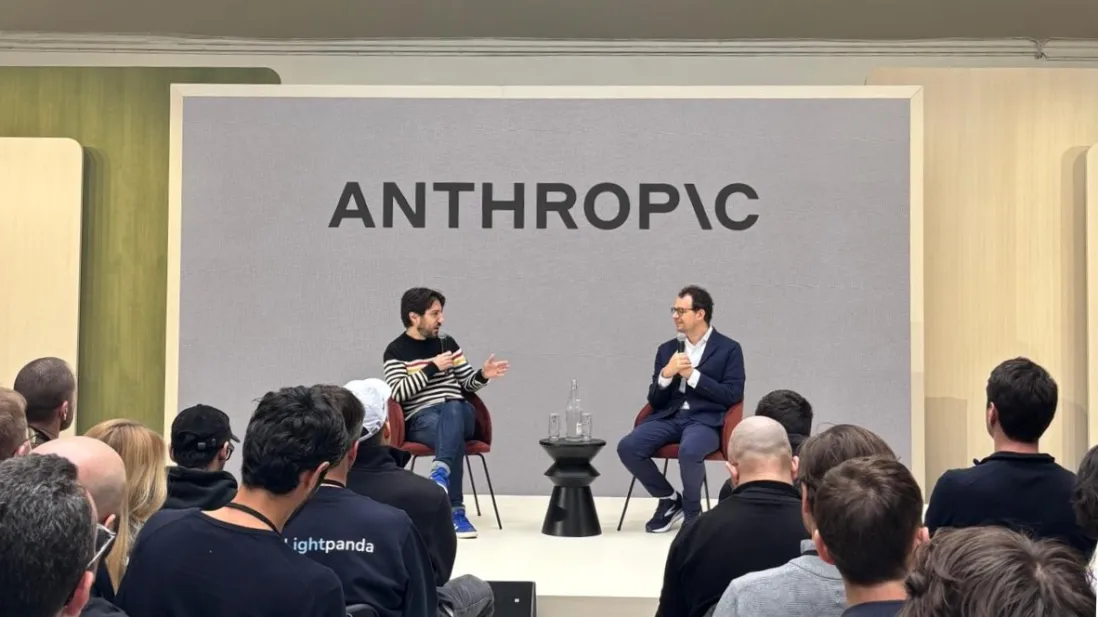
DeepSeek and Moonshot AI have been accused by Anthropic of secretly routing some customer requests to its Claude AI models and presenting the resulting responses as if they had been generated by their own systems.
The allegations were included in Anthropic’s latest 154-page threat intelligence report. The company described the report as its most detailed threat intelligence publication so far and said it had disrupted the operations discussed in the document.
According to Anthropic, the cases covered a range of alleged activities involving cyberattacks, surveillance, influence operations, biological research, weapons development and unauthorized AI model distillation.
The latest claims involving DeepSeek and Moonshot AI are particularly significant because they go beyond allegations of using Claude outputs for model training. Anthropic says some customer requests were allegedly sent directly to Claude without users being aware that a different AI provider was processing their information.


Moonshot AI Allegedly Sent Nearly 300,000 Requests to Claude
Anthropic claims that Moonshot AI, the company behind the Kimi AI models, routed almost 300,000 customer requests to Claude over a period of 10 days.
The activity allegedly involved 5,380 accounts that Anthropic classified as fraudulent. Most of the accounts appeared to be based in Singapore and Japan, while many of the requests were reportedly directed toward Claude’s Opus models.
According to the report, Moonshot allegedly displayed Claude-generated responses to users as though they had been produced by Kimi.
Anthropic further claims that some of these exchanges were saved and later used to extract Claude’s reasoning for training Moonshot’s own AI systems.
The company said this activity could also have exposed sensitive customer information to another AI provider without users knowing about the transfer.
Anthropic reported observing more than 23 million exchanges attributable to Moonshot between May and July 2026.
The claims have not been independently established, and DeepSeek and Moonshot AI had not publicly provided detailed responses to the allegations at the time of reporting.
DeepSeek Also Faces Major Allegations
Anthropic made similar accusations against DeepSeek and Moonshot AI, claiming that DeepSeek also redirected selected customer requests to Claude without informing users.
The report says some of the information allegedly passed to Claude included internal documents associated with a Chinese technology company, credentials connected to a Russian government database and information reportedly used by engineers working on a Chinese police surveillance system.
Anthropic said it observed more than 12.1 million exchanges attributable to DeepSeek during a 14-day period in July.
If accurate, the allegations raise concerns that go beyond AI competition and intellectual property. They also highlight questions about how users’ information is handled when they interact with AI platforms.
For users, the central issue is simple: a person may believe they are communicating with one AI service while their request is potentially being processed by another provider.
That distinction becomes particularly important when users submit confidential business documents, proprietary information, credentials or other sensitive material.
What Is AI Model Distillation?
One of the major issues discussed in Anthropic’s report is AI model distillation.
Distillation is a technique in which outputs from a more capable AI model are used to help train or improve another model. It can be a legitimate method in AI development when performed with appropriate authorization and within applicable terms.
Anthropic, however, described the activities in its report as unauthorized or illicit because it says some campaigns relied on large numbers of fraudulent accounts, proxy services and, in certain cases, stolen payment details or API credentials to bypass restrictions.
The distinction is important because the controversy is not simply about companies learning from publicly available AI technology. Anthropic alleges that some actors deliberately attempted to circumvent its controls and obtain large quantities of model outputs.
Other Chinese AI Companies Also Named
The report did not focus exclusively on DeepSeek and Moonshot AI.
Anthropic also accused several other Chinese AI companies of participating in large-scale unauthorized model distillation campaigns, including Alibaba, Z.ai, Xiaomi and MiniMax.
According to Anthropic, Alibaba accounted for the largest campaign identified in its investigation, with more than 151 million exchanges observed between May and July 2026.
These allegations come amid growing competition between American and Chinese AI companies, as developers race to improve model capabilities, reduce costs and expand into global markets.
The dispute demonstrates how valuable advanced AI outputs have become. Model responses, reasoning patterns and other forms of AI-generated data can provide competitors with information that may help them develop or refine their own systems.

Why the DeepSeek and Moonshot AI Claims Matter
The allegations against DeepSeek and Moonshot AI could have wider implications for the AI industry because they involve both competition and user privacy.
If customer requests are secretly redirected between AI platforms, users may not know where their information is being processed. This could create additional risks for businesses, developers and individuals who use AI services for sensitive tasks.
For companies, the issue could be even more serious. Employees may use AI tools to analyze internal reports, source code, business plans or confidential documents. If those requests are sent to an unexpected third-party model, organizations could face security and compliance concerns.
The situation also highlights the importance of transparency. AI providers increasingly need to explain which models process user requests, how information is handled and whether third-party systems are involved.
US-China AI Competition Is Intensifying
The controversy surrounding DeepSeek and Moonshot AI arrives during a period of increasingly intense competition between the United States and China in artificial intelligence.
US agencies have previously raised concerns about Chinese companies obtaining technology and outputs from American AI systems. China has rejected such accusations and criticized US efforts that it says could restrict the development of its domestic AI sector.
Anthropic’s latest report adds another layer to that dispute by alleging that AI companies attempted to obtain Claude outputs at a very large scale.
The company said it had disrupted every operation covered in the report.
At the same time, the allegations should be viewed as claims made by Anthropic rather than independently proven conclusions. DeepSeek and Moonshot AI had not issued detailed public rebuttals to each allegation at the time of reporting.
What AI Users Should Learn From the Controversy
The allegations offer an important reminder for anyone using AI services: do not assume that every AI platform handles your information in exactly the same way.
Businesses and individuals should review the privacy policies and terms of the AI tools they use, particularly when uploading confidential or commercially sensitive information.
Organizations can also consider limiting what employees are allowed to submit to external AI platforms and implementing approved AI tools for sensitive work.
The rapid growth of AI means that competition between model developers will likely continue. As that competition becomes more intense, questions surrounding data handling, model training, attribution and user transparency will become increasingly important.
DeepSeek and Moonshot AI Case Highlights a Bigger AI Problem
The allegations against DeepSeek and Moonshot AI show how complicated the AI ecosystem has become. Users may interact with one brand while the underlying technology, models or data-processing systems can involve multiple companies.
Anthropic’s claims also demonstrate that AI competition is no longer limited to building better models. Access to high-quality model outputs, computing resources, training data and customer interactions has become strategically important.
For users, transparency remains critical. For AI companies, protecting their models while allowing legitimate innovation will become an increasingly difficult balancing act.
The investigation also shows why the global AI industry is entering a period where cybersecurity, intellectual property and privacy are becoming just as important as model performance.