


Dubai is taking another major step to strengthen its position as a Dubai gold hub, with the emirate planning to expand its role across gold trading, financing, storage, pricing and jewellery.
The move comes after foreign gold trade in Dubai reached around Dh1 trillion in 2025, representing a 60 per cent year-on-year increase. The UAE also handled about 2,750 tonnes of physical gold, placing it among the world’s leading physical gold trading centres.
The latest strategy aims to develop the entire gold value chain and connect producers, refiners, traders, financial institutions and consumers across key markets in Africa, the Middle East and Asia.
Table of Contents
Dubai Gold Hub Strategy Gains Momentum
Dubai’s government has proposed six strategic directions to strengthen the Dubai gold hub ecosystem.
The plan covers:
- Gold trading
- Gold financing
- Secure storage
- Market competitiveness
- Price discovery
- Jewellery and retail demand
The strategy was reviewed during a meeting chaired by Sheikh Maktoum bin Mohammed bin Rashid Al Maktoum, First Deputy Ruler of Dubai, Deputy Prime Minister and Minister of Finance.
The wider objective is to make Dubai’s financial and commodities markets more competitive while attracting international businesses, investors and talent.
Gold Trade Reaches Dh1 Trillion
One of the biggest reasons behind Dubai’s renewed gold ambitions is the rapid growth of its international gold trade.
According to figures reviewed by the committee, Dubai’s foreign gold trade increased by 60 per cent year-on-year to approximately Dh1 trillion in 2025.
Physical gold traded in the UAE reached around 2,750 tonnes, while the government estimates that approximately 13 to 15 per cent of globally traded gold passes through Dubai each year.
That scale gives the Dubai gold hub an important role between major producing and consuming markets.
The emirate’s location also provides access to trading corridors connecting Africa, Asia and the Middle East, making it an important location for companies involved in the international precious metals industry.
1. Building a Bigger Global Gold Trading Market
The first major direction of the strategy is to develop an integrated global gold trading market.
Dubai plans to strengthen connections between gold producers, refineries and buyers across Africa, the Middle East and Asia.
This could help businesses move through a more connected ecosystem where sourcing, refining, trading and distribution can take place through established Dubai-based infrastructure.
The objective is not simply to increase the amount of gold passing through the emirate. It is also about making the Dubai gold hub more competitive as a complete marketplace.

2. Expanding Gold Financing
Gold is not only a physical commodity. It can also be used in financial transactions, collateral arrangements and institutional investment.
Dubai’s proposed strategy therefore includes expanding its role as a centre for gold financing.
The plan includes opportunities related to:
- Clearing
- Collateralisation
- Hedging
- Institutional trading
- Trade finance
This direction could further connect the Dubai gold hub with the emirate’s rapidly developing financial-services ecosystem.
Dubai already has infrastructure supporting commodity financing. The Dubai Multi Commodities Centre, for example, operates Tradeflow, a platform supporting commodity registration, collateral and trade financing.
3. More Secure Gold Storage
Another important part of the strategy is secure storage.
As Dubai seeks to handle more international gold flows, secure vaulting and storage infrastructure become increasingly important.
The strategy proposes expanding storage capacity while improving the systems used to track gold throughout the supply chain.
This could strengthen confidence among international traders, financial institutions and other companies using Dubai as a base for precious metals activities.
DMCC says its gold ecosystem includes specialised precious metals vaults, refineries and jewellery manufacturing facilities, creating infrastructure around multiple stages of the gold value chain.
4. Improving Traceability and Transparency
Growth in the gold market also brings greater attention to responsible sourcing and transparency.
Dubai’s strategy includes improving traceability and transparency, which could become increasingly important for international companies operating across complex gold supply chains.
The UAE already has a national UAE Good Delivery Standard designed to establish quality and transparency requirements for gold traders and refiners. The Emirates Gold Bullion Committee oversees the standard, according to DMCC’s gold-sector information.
DMCC also highlights responsible sourcing and due-diligence requirements as part of the UAE’s wider approach to the precious metals sector.
For the Dubai gold hub, stronger traceability could help support international confidence while making the market more attractive to institutions that require clear sourcing and compliance standards.
5. Developing Better Gold Price Discovery
Price discovery is another key part of Dubai’s proposed gold strategy.
In simple terms, price discovery is the process through which buyers and sellers establish market prices based on supply, demand and trading activity.
Dubai wants to develop platforms and financial instruments that can support more effective price discovery.
This is significant because a stronger Dubai gold hub could potentially play a larger role in how regional and international participants access gold prices, manage risk and conduct institutional transactions.
The strategy’s focus on pricing also fits into Dubai’s wider ambition to become a more influential global financial centre.
6. Growing Jewellery and Retail Demand
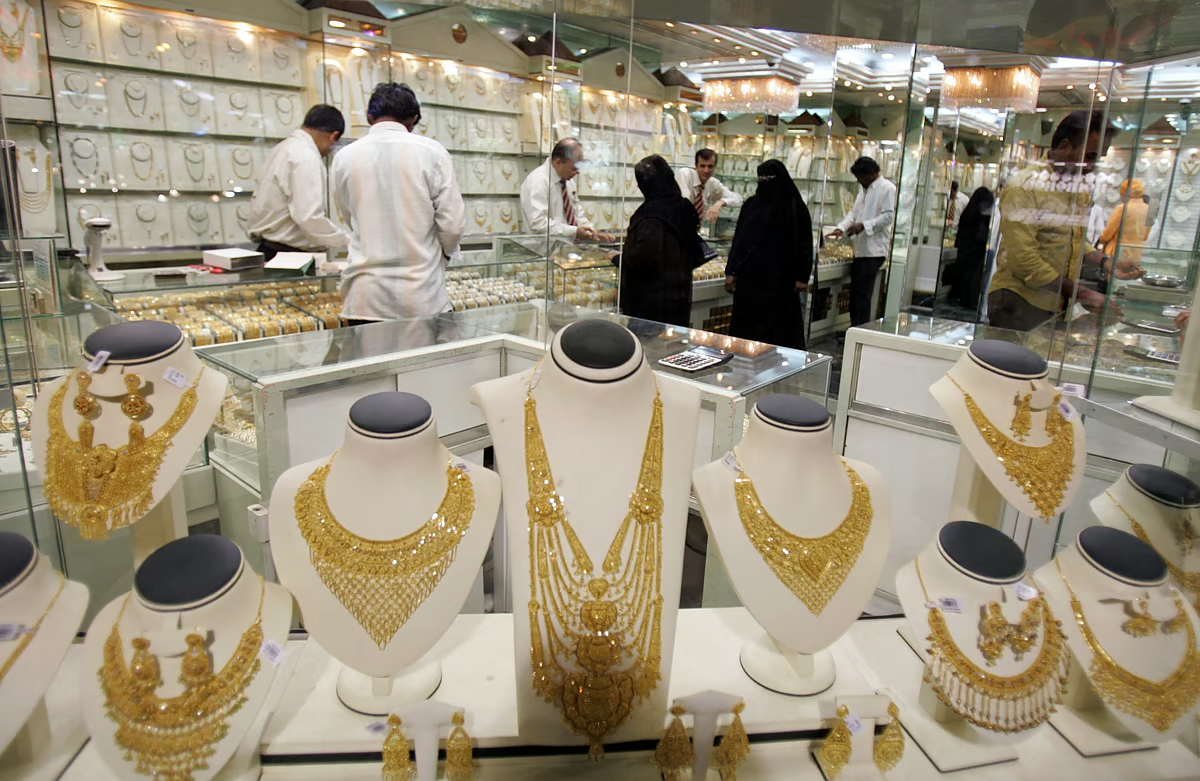
Dubai is already internationally recognised for its jewellery market, and the new strategy places retail demand among its six priorities.
The plan aims to strengthen Dubai’s position as a global destination for jewellery and gold retail.
This gives the strategy a consumer-facing dimension in addition to its focus on banks, traders, refiners and financial institutions.
The Dubai gold hub therefore extends beyond large-scale international transactions. It also includes jewellery manufacturers, retailers, tourists and consumers purchasing gold products.
New Committee to Drive the Gold Strategy
Dubai has also approved the establishment of a committee to oversee implementation of the strategy.
The committee will be chaired by Abdulla bin Damithan, Chairman of the Ports, Customs and Free Zone Corporation.
Its responsibilities include developing specific initiatives, coordinating with relevant organisations, identifying partners and establishing timelines for implementation.
This is an important step because the strategy is moving beyond broad ambitions toward practical projects.
The government also highlighted the importance of public-private partnerships, which could bring together government bodies, financial institutions, commodity companies, refiners and retailers.
Dubai’s Wider Financial Ecosystem Is Growing
The push to strengthen the Dubai gold hub comes alongside growth across the emirate’s wider financial sector.
According to figures reviewed by the committee, Dubai ranked first globally in FinTech in the September 2026 Global Financial Centres Index, improving from fifth place in March.
The emirate also improved its ranking in professional services and reputation.
Dubai’s virtual-asset sector has expanded as well. The number of licensed Virtual Asset Service Providers under the Virtual Assets Regulatory Authority reached 52, while assets under management reached Dh28 billion, according to the figures presented at the meeting.
The Dubai Financial Market also recorded strong activity, with market capitalisation reaching Dh993.1 billion at the end of the third quarter of 2026.
These developments create a broader financial environment for the emirate’s commodities ambitions.
DMCC Remains a Major Part of Dubai’s Gold Ecosystem
The Dubai Multi Commodities Centre is another major component of the emirate’s gold infrastructure.
DMCC describes Dubai as one of the world’s largest gold trading hubs and says the emirate accounts for around 15 per cent of worldwide gold trade. Its ecosystem includes vaults, refineries, jewellery manufacturing facilities, the Dubai Gold and Commodities Exchange and commodity-financing infrastructure.
The organisation also supports initiatives involving responsible sourcing, gold financing and digitalisation.
This combination of physical infrastructure and financial technology is helping transform the traditional Dubai gold hub into a broader commodities ecosystem.
What Dubai’s Gold Strategy Could Mean for Global Trade
The strategy could have implications well beyond the UAE.
A stronger Dubai gold hub could provide international companies with greater access to trading, financing, storage and distribution infrastructure in one location.
For producers in Africa, refiners in the Middle East and buyers across Asia, stronger connectivity could make Dubai an even more important intermediary in global gold flows.
The emphasis on traceability, responsible sourcing and price discovery could also help the emirate compete in a market where transparency and financial infrastructure are becoming increasingly important.
At the same time, Dubai’s existing jewellery industry gives the strategy a direct connection to consumers.
Dubai’s Gold Ambition Enters a New Phase
Dubai has already built a strong reputation as a global centre for precious metals. The latest strategy shows that the emirate wants to take that position further by developing not just gold trading, but the complete ecosystem surrounding the commodity.
From trading and financing to storage, pricing, traceability and retail, the proposed strategy covers almost every major stage of the gold value chain.
With foreign gold trade reaching around Dh1 trillion in 2025 and thousands of tonnes of physical gold moving through the UAE, the next phase could further strengthen the Dubai gold hub and its role in international precious metals markets.
For businesses and investors watching global commodities, Dubai’s gold strategy is therefore a development worth following closely.