

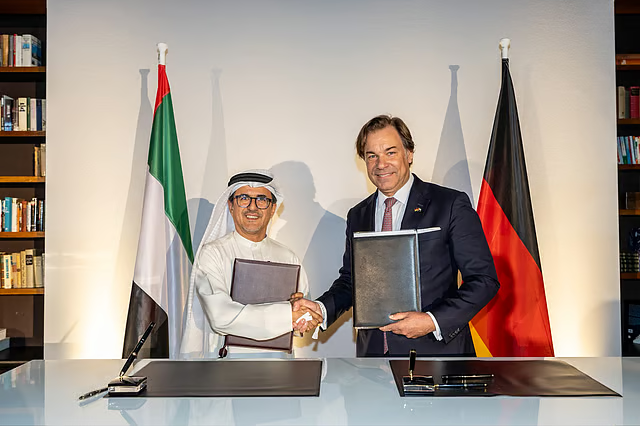
The UAE and Germany are deepening their strategic economic relationship through a new wave of UAE energy deals covering liquefied natural gas, natural gas, offshore wind, battery storage, advanced materials and artificial intelligence.
ADNOC, XRG and Masdar have signed agreements with major German companies that could enable more than €5 billion in investment across Germany’s energy and industrial sectors. The agreements were announced during UAE President Sheikh Mohamed bin Zayed Al Nahyan’s state visit to Germany and follow the UAE’s announcement of €40 billion in intended long-term investment in the country.
The latest partnerships involve companies including RWE, Securing Energy for Europe (SEFE), MB Energy, Covestro, Siemens Energy, Siemens Industrial and Bosch Middle East. Together, they show how cooperation between the two countries is moving beyond traditional energy supply toward renewables, industrial development and advanced technology.

Table of Contents
UAE Energy Deals Could Unlock More Than €5 Billion
The new agreements could enable more than €5 billion of investment in Germany’s energy and industrial sectors. They combine UAE energy expertise and long-term capital with Germany’s industrial and technological capabilities.
The deals also build on an established investment relationship. ADNOC, XRG and Masdar have already invested more than €20 billion across Germany’s energy and industrial base.
One of the largest existing investments is XRG’s approximately €14 billion investment in Covestro, while Masdar has invested in the Baltic Eagle offshore wind farm. ADNOC also has long-term LNG supply agreements into Germany totaling 1.6 million tonnes per annum, according to ADNOC.
These developments suggest that the latest UAE energy deals are part of a wider long-term strategy rather than isolated commercial agreements.
LNG Partnerships Aim to Strengthen Energy Security
Natural gas remains an important part of the cooperation between the UAE and Germany.
ADNOC and RWE Supply & Trading GmbH signed a Letter of Intent to progress up to two long-term LNG sales and purchase agreements. The proposed arrangements would support LNG supplies to Germany and Europe, as well as Asian customers, with supply expected to begin in the early 2030s.
The discussions build on a Strategic Collaboration Agreement signed between ADNOC and RWE in February 2026.
ADNOC, XRG and SEFE have also signed a Memorandum of Understanding to explore opportunities throughout the natural gas and LNG value chains. Areas under consideration include gas supply, infrastructure, logistics and portfolio optimisation.
The goal is to support long-term energy security and market development in Europe.
Germany has been working to diversify its energy sources, making long-term LNG partnerships an important component of its broader energy strategy. The latest UAE energy deals could therefore strengthen commercial ties while creating additional options for European energy markets.
Masdar Expands Offshore Wind and Battery Storage Plans
The renewable energy side of the agreements is equally significant.
Masdar and RWE signed an MoU to consider joint participation in future German offshore wind auctions. Masdar said the potential investment associated with this agreement has an indicative value exceeding €3 billion.
Masdar also signed an MoU with German energy infrastructure asset manager Luxcara to explore potential joint investments in offshore wind and battery energy storage systems in Germany and wider Europe.
That second partnership could involve investments exceeding €5 billion, according to Masdar.
Battery storage is becoming increasingly important as renewable electricity production grows. Storage systems can help balance electricity supply and demand and support the integration of intermittent renewable sources into power systems.
For Germany, partnerships in offshore wind and battery storage could support the expansion of clean-energy infrastructure. For the UAE, they provide opportunities to expand its position as a long-term investor in Europe’s energy transition.
UAE Energy Deals Move Into Advanced Technology
The new cooperation is not limited to oil, gas and renewable electricity.
ADNOC has signed Strategic Collaboration Agreements with Bosch Middle East, Siemens Energy and Siemens Industrial to explore cooperation in advanced technology and artificial intelligence.
This creates another dimension to the UAE-Germany relationship. Energy companies increasingly depend on digital systems, automation, data analysis and AI to improve operations and efficiency.
Industrial technology can also support areas such as predictive maintenance, asset monitoring and optimisation. While the agreements are still focused on exploring collaboration, they demonstrate the expanding role of technology within the two countries’ energy partnership.
The development also fits with the UAE’s broader push to connect energy investment with advanced industries and digital capabilities.
For readers following global technology and business trends, the growing intersection of AI and industrial infrastructure is worth watching.
Advanced Materials and Low-Carbon Ammonia Add New Opportunities
The partnerships also extend into advanced materials and lower-carbon energy supply chains.
TA’ZIZ and Covestro signed a Letter of Intent covering the next steps in their joint feasibility study for a world-scale methylene diphenyl diisocyanate, or MDI, value chain in Ruwais. The companies aim to determine the next phase following the outcome of the study and required approvals.
Another agreement involving Covestro, Fertiglobe and MB Energy will explore cooperation supporting the development of low-carbon ammonia supply chains into Germany.
These initiatives connect the UAE’s energy and industrial capabilities with Germany’s manufacturing and technology base.
The potential impact could extend beyond energy imports. Developing industrial value chains can create opportunities in manufacturing, infrastructure, logistics and technology while supporting the transition toward lower-carbon industrial systems.
What the UAE-Germany Partnership Could Mean for Europe
The latest UAE energy deals represent a broader shift in how energy partnerships are being developed.
Instead of focusing on a single fuel or project, the agreements connect several areas:
- LNG and natural gas: Supporting potential long-term energy supplies to Germany and Europe.
- Offshore wind: Exploring investment in future German offshore wind opportunities.
- Battery storage: Expanding opportunities for energy storage across Germany and Europe.
- Advanced materials: Developing industrial value chains involving companies such as Covestro.
- Low-carbon ammonia: Exploring new supply chains into Germany.
- Artificial intelligence: Connecting energy and industrial projects with advanced technology.
The agreements also come as the UAE and Germany continue to strengthen their wider economic relationship. Bilateral trade exceeded €13.56 billion in 2025, while around 2,000 German companies operate in the UAE, according to UAE government information reported by Gulf News.
The UAE’s latest announcement of €40 billion in intended long-term investment further highlights the scale of its ambitions in Germany.
For Germany, UAE capital and energy expertise can support investment in critical infrastructure and emerging technologies. For the UAE, Germany offers access to a major European industrial economy and advanced technological capabilities.
The result could be a partnership that increasingly connects traditional energy, renewable power, industrial production and artificial intelligence.
Conclusion: A New Chapter in UAE-Germany Energy Cooperation
The latest UAE energy deals show how rapidly the relationship between the UAE and Germany is evolving.
ADNOC and RWE are working toward potential long-term LNG agreements, ADNOC, XRG and SEFE are exploring wider gas cooperation, while Masdar is expanding discussions around offshore wind and battery storage. At the same time, partnerships with German industrial and technology companies are opening new possibilities in advanced materials and AI.
With more than €5 billion in potential investment tied to the latest agreements and a separate €40 billion long-term investment commitment from the UAE, the partnership could have a significant impact on Germany’s energy and industrial landscape.
The most important development may be the breadth of the cooperation. Gas, renewable energy, storage, manufacturing and technology are increasingly being brought together under one strategic relationship.
As these agreements move from planning and feasibility studies toward investment decisions and projects, Germany and the UAE could create new opportunities across Europe’s evolving energy economy.