



A sharp escalation in maritime tensions in the Gulf has forced more than 20 vessels to reverse course toward Iran, underscoring the fragile state of global energy routes as the United States intensifies its naval blockade on Iranian shipping. Blockade
According to the US Central Command, at least 21 ships have complied with directives from US forces to turn back since the blockade began on April 13. The move reflects growing caution among commercial operators navigating an increasingly volatile environment in and around the Strait of Hormuz, a critical artery that carries roughly one-fifth of the world’s oil supply. Blockade
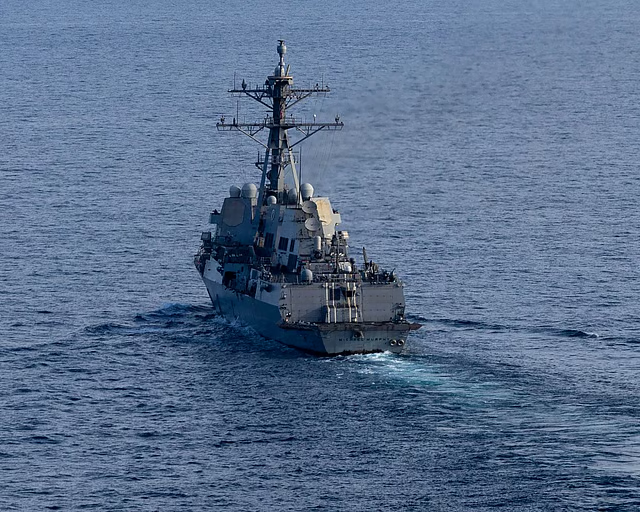
Table of Contents
Strait Reopens—But Under Tight Control
Iran has announced the reopening of the Strait of Hormuz to commercial traffic, attempting to signal stability. However, maritime activity remains heavily restricted. Tehran continues to exercise strict oversight, limiting vessel movement to designated corridors and maintaining control over transit routes.
Despite the official reopening, shipping data and industry analysts indicate that traffic remains subdued. Many shipping companies are opting for caution, wary of sudden policy shifts or potential military escalation.
The strait has been under sustained pressure since tensions surged following the late-February escalation involving the US, Israel, and Iran. While a temporary ceasefire between Washington and Tehran is currently in place, it is set to expire on April 22—raising concerns about renewed disruptions to one of the world’s most vital shipping lanes.
Washington Signals No Retreat
US President Donald Trump has made it clear that the blockade will remain in force until broader strategic objectives are met, including progress on Iran’s nuclear programme. Speaking aboard Air Force One, Trump framed the blockade as a necessary measure, while leaving the door open for escalation if diplomatic efforts falter.
He also dismissed speculation about imposing transit fees on vessels using the strait, stating unequivocally that no toll system would be introduced.
At the same time, Trump warned that the ceasefire may not be extended if negotiations fail to produce results. His remarks pointed to the possibility of renewed military action, reinforcing uncertainty across the region.
Tehran Pushes Back
Iranian officials have responded with firm warnings. Mohammad Bagher Ghalibaf cautioned that the Strait of Hormuz could be closed again if US naval restrictions persist. The statement highlights Tehran’s willingness to leverage its geographic position as a pressure point in the ongoing standoff.
Iran has also signalled that continued US military pressure will not force concessions, suggesting that both sides remain entrenched in their positions.
Diplomatic Efforts Amid Rising Risk
Amid the tensions, diplomatic channels remain open—though uncertain. US and Iranian delegations are reportedly expected to travel to Pakistan for potential talks, though Washington has yet to formally confirm the meetings.
Meanwhile, a separate ceasefire involving Israel and Hezbollah in Lebanon appears to be largely holding, despite isolated violations. Still, analysts warn that overlapping regional flashpoints could quickly converge, amplifying risks.
Global Implications
The ongoing standoff in the Strait of Hormuz is reverberating far beyond the Gulf. Energy markets remain sensitive to developments, with traders closely monitoring the situation for signs of escalation or disruption.
Even with the strait technically open, the combination of military oversight, restricted navigation, and political uncertainty continues to weigh heavily on global shipping confidence. If tensions escalate further, the consequences for oil flows, insurance costs, and maritime stability could be immediate and far-reaching.
For now, the message from the Gulf is clear: the waterway may be open, but it is far from secure.