


Introduction Of Strait Of Hormuz
Washington: Tensions in the Gulf have escalated sharply as the United States intensifies its naval blockade operations while Iran moves to consolidate control over the strategically vital Strait of Hormuz—a chokepoint for nearly a fifth of global oil shipments.
Table of Contents
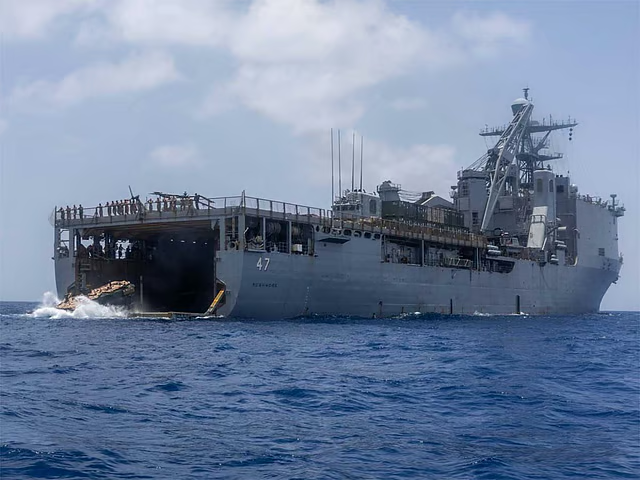
The US Central Command confirmed that the dock landing ship USS Rushmore is actively conducting blockade operations in the Arabian Sea. The deployment underscores Washington’s continued effort to enforce maritime restrictions amid ongoing tensions with Tehran.
Supporting operations include the guided-missile destroyer USS Pinckney, currently patrolling regional waters, and the amphibious transport dock USS New Orleans, which is monitoring commercial shipping activity.
The escalation follows a dramatic announcement by Iran’s Islamic Revolutionary Guard Corps (IRGC), which declared that the Strait of Hormuz had been closed since Saturday evening. Iranian officials stated that the waterway would remain shut until the United States lifts its naval blockade.
Just a day earlier, both Washington and Tehran had indicated that the strait was fully open to commercial traffic. However, Donald Trump reaffirmed that US blockade measures would “remain in full force,” signaling no immediate de-escalation from the American side.
Iran responded with a warning that it would once again shut down the waterway if US restrictions persist. The country’s Supreme National Security Council (SNSC) emphasized its intent to assert full control over maritime traffic through the strait until a definitive end to hostilities is achieved.
According to Iranian state media, authorities plan to enforce strict oversight mechanisms, including mandatory vessel identification, issuance of transit permits, and the imposition of fees for security and environmental services. Traffic through the strait would also be directed under wartime protocols.
The SNSC further warned that any attempt by the United States to disrupt shipping—particularly through blockade enforcement—would be considered a violation of the current two-week ceasefire. In such a scenario, Iran indicated it would halt any conditional reopening of the strait.
The unfolding standoff raises serious concerns for global energy markets and maritime security. With both sides hardening their positions, the Strait of Hormuz once again finds itself at the center of a high-stakes geopolitical confrontation, with far-reaching implications for international trade and regional stability.