

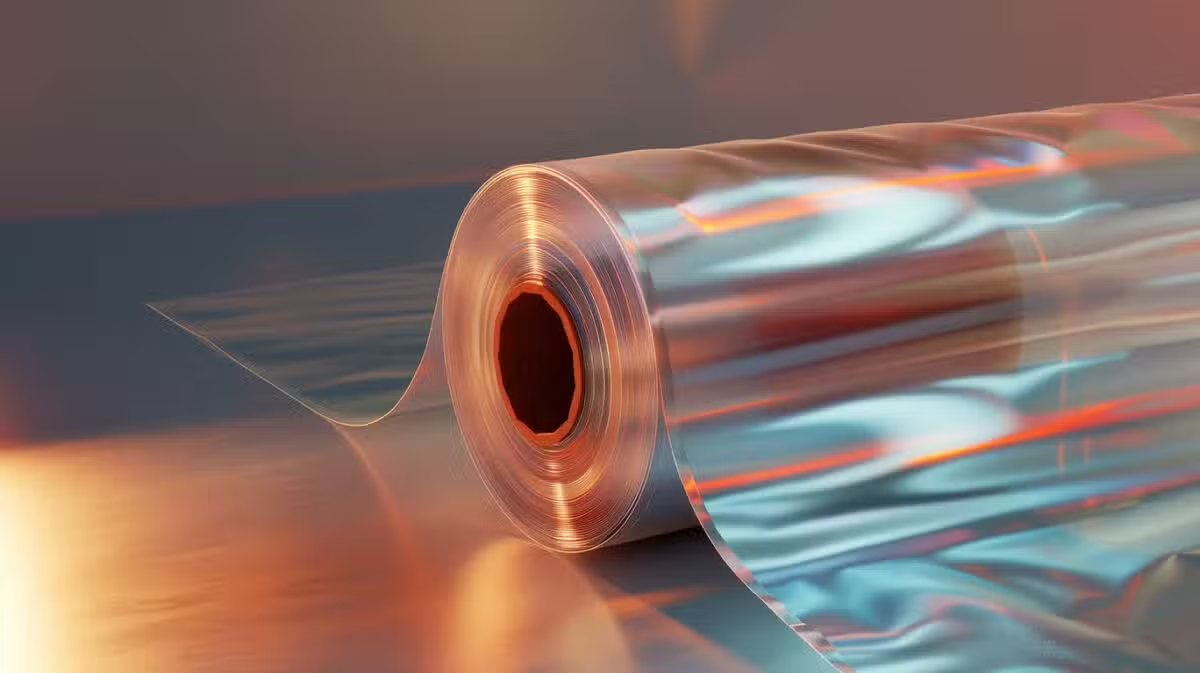
Flexible packaging is emerging as an important opportunity for Pakistan as local manufacturers expand their range of specialized films for domestic and international markets. The sector is increasingly moving toward advanced materials that offer stronger barrier protection, improved recyclability and greater material efficiency.
This shift could help Pakistani manufacturers compete in higher-value segments of the global market while supporting export diversification and reducing dependence on imported specialized packaging materials.
Pakistan’s packaging industry is responding to growing demand from food, fast-moving consumer goods (FMCG) and other consumer sectors for packaging that can improve shelf life, protect products and reduce material use.

Table of Contents
Pakistan’s Growing Flexible Packaging Opportunity
Pakistan is looking to secure a bigger share of the international flexible packaging export market as manufacturers develop products for increasingly technical applications.
The opportunity comes as international buyers place greater emphasis on packaging performance, sustainability and efficient use of materials.
Instead of competing only in conventional packaging products, Pakistani companies can target specialized segments where technical capabilities and product performance can create greater value.
The development is particularly relevant for manufacturers seeking to increase non-traditional exports and generate additional foreign exchange for the country.
New Advanced Packaging Films
International Packaging Films Limited (PSX: IPAK) has introduced a new portfolio of advanced packaging films aimed at higher-value domestic and export applications.
The company unveiled the portfolio at 3P Plas Print Pack Pakistan 2026, held at the Expo Centre Lahore from September 3 to 5.
The new product range includes:
- Coated films
- AlOx transparent barrier films
- Ultra-high-barrier metallized films
- Low-temperature sealing films
- Aroma-barrier films
- High-heat-resistant films
- Retortable films
- Next-generation BOPE films
- Functional-oriented films
- Circular packaging solutions
These products are designed to meet different requirements across the food, FMCG and consumer industries.
Advanced films can provide better protection against moisture, oxygen, aromas and other factors that can affect product quality during storage and transportation.
Flexible Packaging and the Shift Toward Recyclability
Sustainability is becoming an increasingly important factor in the global packaging industry.
Pakistan’s new packaging portfolio includes Mono-PE, Mono-PP, Mono-PET and post-consumer recycled (PCR) films, targeting demand for recyclable and more material-efficient solutions.
The move toward recyclable materials could give Pakistani manufacturers an opportunity to respond to changing expectations from international brands and consumers.
For exporters, developing sustainable packaging solutions can also help companies compete in markets where environmental requirements and packaging regulations are becoming more important.
According to the United Nations Environment Programme, reducing plastic pollution requires changes across the entire plastics lifecycle, including improved product design and waste management.
Export Potential for Pakistani Manufacturers
The expansion of specialized flexible packaging products could help Pakistan move toward higher-value international markets.
At present, manufacturers face competition from established packaging producers across Asia and other regions. Competing successfully requires more than simply increasing production capacity.
Companies also need to develop films that meet specific technical requirements and quality expectations of international buyers.
Advanced barrier films, retortable materials and functional films can help local manufacturers serve customers with more demanding packaging applications.
At the Lahore exhibition, IPAK is engaging with packaging converters, FMCG manufacturers, exporters and international buyers as it looks to expand its customer base and identify new export opportunities.
Supporting Import Substitution
The growth of advanced flexible packaging production could also benefit Pakistan’s domestic market.
If specialized packaging materials can increasingly be manufactured locally, businesses may have less need to rely on imported products for technically demanding applications.
This could support import substitution while strengthening domestic manufacturing capabilities.
Local availability can also provide packaging converters and FMCG companies with easier access to specialized materials and potentially reduce supply-chain dependence on overseas suppliers.
Why Specialized Packaging Matters
Packaging is no longer simply a protective layer around a product.
For food and FMCG companies, packaging can influence shelf life, transportation, product presentation and overall material efficiency.
High-barrier films, for example, can help protect products from external factors, while heat-resistant and retortable films can be used for applications involving demanding processing and storage conditions.
Aroma-barrier films can also be important for products where maintaining flavour and aroma is essential.
This makes advanced flexible packaging an important part of modern manufacturing and export supply chains.
Sustainability Could Strengthen Global Competitiveness
The development of Mono-PE, Mono-PP, Mono-PET and PCR films indicates a broader shift toward packaging solutions that use materials more efficiently and can support recycling goals.
For Pakistan, this could become an important competitive advantage if manufacturers are able to combine sustainability with consistent quality and cost-effective production.
Global brands are increasingly looking for suppliers that can meet both technical and environmental requirements.
Pakistani manufacturers that invest in research, product development and international quality standards could therefore be better positioned to enter new markets.
The World Bank also highlights the growing importance of improved waste management and resource efficiency as countries address the environmental impact of waste.
Future Outlook for Pakistan’s Packaging Exports
Pakistan’s push into advanced flexible packaging comes at a time when the international industry is becoming more specialized and sustainability-focused.
The introduction of higher-performance films provides local manufacturers with an opportunity to move beyond conventional products and compete for more technically demanding export orders.
However, long-term growth will depend on maintaining international quality standards, developing cost-efficient production and building reliable relationships with overseas buyers.
Continued investment in advanced manufacturing and recyclable materials could help Pakistan strengthen its position in the global packaging supply chain.
The sector may also benefit from closer cooperation between manufacturers, exporters, FMCG companies and international packaging buyers.
A Strong Opportunity for Pakistan
The expansion of flexible packaging production represents more than a product diversification strategy. It could become part of Pakistan’s wider effort to increase value-added manufacturing and expand non-traditional exports.
With demand growing for recyclable materials, stronger barrier protection and improved packaging efficiency, Pakistani manufacturers have an opportunity to serve both domestic customers and international markets.
If local companies continue developing specialized products and strengthening their export capabilities, Pakistan could capture a larger share of the global packaging market and create new opportunities for foreign-exchange earnings.