


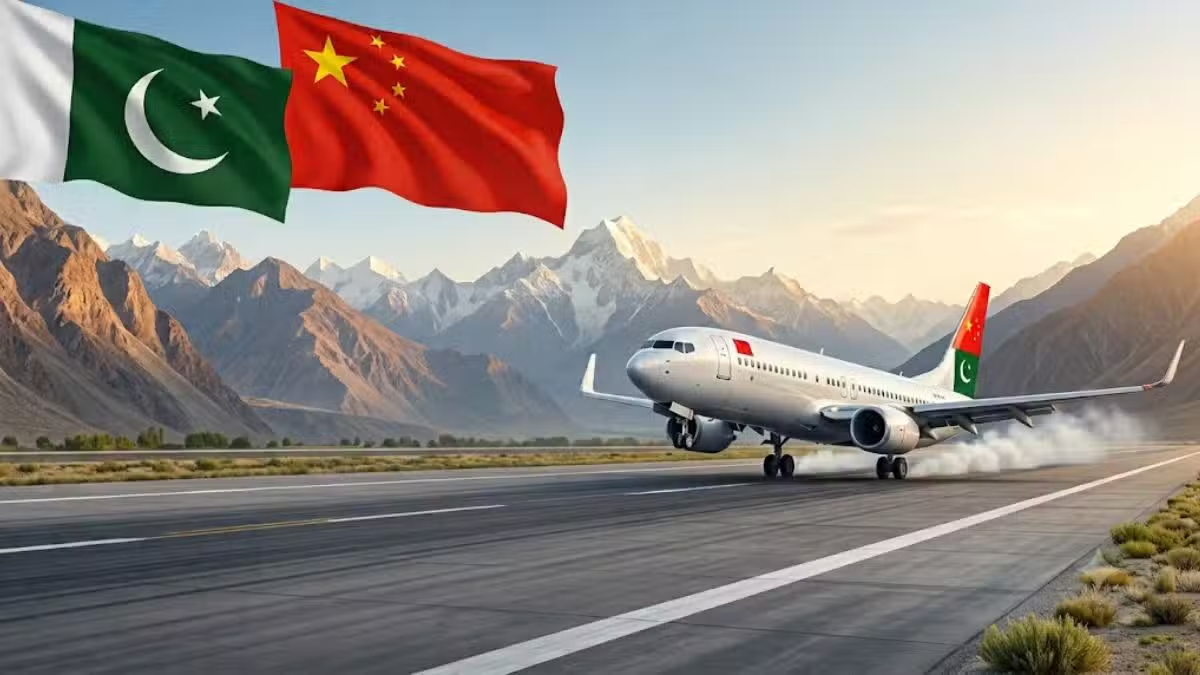
Direct Flights Between Gilgit-Baltistan and China may soon become a reality as the Gilgit-Baltistan (GB) government has formally proposed launching direct air connectivity between Skardu, Pakistan, and Kashgar in China’s Xinjiang region. If approved, the initiative could significantly improve tourism, cross-border trade, business travel, and cultural exchange while strengthening the long-standing partnership between Pakistan and China.
The proposal comes at a time when both countries are expanding economic cooperation under the China-Pakistan Economic Corridor (CPEC). Improved air connectivity would complement existing road infrastructure and provide travelers with a faster, safer, and more convenient transportation option.
Table of Contents
Direct Flights Between Gilgit-Baltistan and China: A Strategic Proposal
The proposal was discussed during a high-level meeting between Gilgit-Baltistan Chief Minister Amjad Hussain Azar and Chinese Ambassador Jiang Zaidong.
Officials proposed launching a direct commercial air route linking Skardu Airport with Kashgar Airport, creating the first direct air bridge between northern Pakistan and China’s Xinjiang region.
The initiative aims to reduce travel time significantly while improving accessibility for tourists, investors, business travelers, and government delegations.
Unlike existing travel routes that often require multiple connecting flights or lengthy road journeys through mountainous terrain, direct flights would provide a much faster alternative.
Why Direct Flights Between Gilgit-Baltistan and China Matter
Northern Pakistan has become one of South Asia’s fastest-growing tourism destinations. Every year thousands of domestic and international tourists visit Hunza, Skardu, Deosai National Park, Fairy Meadows, Khunjerab Pass, and the Karakoram mountain range.
Despite its popularity, international accessibility remains limited.
Launching Direct Flights Between Gilgit-Baltistan and China would solve one of the region’s biggest transportation challenges by making northern Pakistan more accessible to Chinese travelers.
It would also strengthen regional integration between Pakistan and western China, encouraging long-term cooperation beyond traditional trade routes.
Skardu and Kashgar: Two Important Tourism Gateways
Skardu serves as Pakistan’s gateway to some of the world’s highest mountains, including K2, while Kashgar is one of China’s most historic Silk Road cities located in Xinjiang.
Connecting these two destinations would create exciting travel opportunities for adventure tourists, mountain climbers, photographers, historians, and cultural travelers.
The route could also become part of broader Silk Road tourism initiatives that promote cross-border heritage and sustainable tourism.


How Direct Flights Between Gilgit-Baltistan and China Could Boost Tourism
One of the biggest advantages of Direct Flights Between Gilgit-Baltistan and China is the enormous potential for tourism growth. China is one of the world’s largest outbound tourism markets, with millions of travelers exploring international destinations every year. Easier air connectivity would encourage more Chinese visitors to experience Pakistan’s breathtaking northern landscapes without lengthy road journeys or multiple flight connections.
Popular destinations such as Hunza Valley, Skardu, Khaplu, Shigar, Deosai National Park, Satpara Lake, and the Karakoram Mountains could see a significant increase in international arrivals. Adventure tourism, trekking expeditions, mountaineering, photography tours, and cultural tourism would all benefit from improved accessibility.
For Pakistani travelers, the new route would also provide a convenient gateway to China’s Xinjiang region, allowing tourists to explore Kashgar’s historic Silk Road markets, ancient mosques, and vibrant cultural heritage.
Direct Flights Between Gilgit-Baltistan and China Could Strengthen Trade
Beyond tourism, Direct Flights Between Gilgit-Baltistan and China have the potential to improve commercial trade between both regions.
Gilgit-Baltistan produces high-quality agricultural products, including cherries, apricots, apples, walnuts, almonds, and organic honey. Faster air transportation would make it easier to export fresh produce to Chinese markets while reducing transportation time and preserving product quality.
Chinese businesses could also benefit by improving logistics, transporting specialized equipment, and expanding commercial partnerships in northern Pakistan.
The proposed route complements the broader objectives of the China-Pakistan Economic Corridor (CPEC), which continues to strengthen trade and infrastructure cooperation between both countries.
Visa-on-Arrival Proposal for Chinese Tourists
During the meeting, the Gilgit-Baltistan government also proposed introducing a Visa-on-Arrival facility for Chinese tourists, subject to approval by Pakistan’s federal government.
If implemented, the initiative would significantly simplify travel procedures for visitors from China.
Combined with Direct Flights Between Gilgit-Baltistan and China, a streamlined visa process could make Pakistan’s northern regions much more competitive compared to other international mountain destinations.
This proposal reflects Pakistan’s broader efforts to attract international tourism while strengthening diplomatic and economic relations with neighboring countries.
Pakistan Visa Information:https://visa.nadra.gov.pk/
Investment Opportunities for Chinese Companies
Government officials also invited Chinese investors to explore opportunities across multiple sectors in Gilgit-Baltistan.
These include tourism infrastructure, hotels and resorts, renewable energy projects, hydropower development, mining, transportation, and public infrastructure.
The region possesses enormous untapped natural resources, and improved air connectivity could make investment projects easier to manage by reducing travel time for executives, engineers, and project teams.
According to officials, Chinese Ambassador Jiang Zaidong welcomed the proposals and confirmed they would be forwarded to relevant authorities for further consideration.
Challenges Before Launch
Although the proposal has generated optimism, several practical challenges must still be addressed before Direct Flights Between Gilgit-Baltistan and China can begin operating.
Civil aviation authorities from both countries must approve flight schedules, security procedures, customs regulations, immigration requirements, and bilateral aviation agreements.
Airlines will also need to evaluate passenger demand, aircraft availability, operational costs, and long-term commercial viability before launching regular services.
Despite these challenges, analysts believe the proposal represents an important step toward strengthening regional connectivity.

Tourism and Trade Opportunities Through Direct Flights Between Gilgit-Baltistan and China
The proposed direct flights between Gilgit-Baltistan and China could become a major step toward improving regional connectivity and boosting economic activity between Pakistan’s northern areas and China’s Xinjiang region.
Gilgit-Baltistan is already known for its breathtaking landscapes, including Hunza Valley, Skardu, Deosai National Park, and some of the world’s highest mountain peaks. Easier air access from China could attract more international tourists who are interested in adventure tourism, cultural experiences, and mountain exploration.
According to the Pakistan Tourism Development Corporation, northern Pakistan has significant potential for tourism growth due to its natural beauty and unique cultural heritage. Improved transportation links can help unlock this potential by making remote destinations more accessible.
Economic Benefits of Gilgit-Baltistan China Air Connectivity
The launch of direct flights between Skardu and Kashgar could also support trade and business opportunities. Both regions share geographical proximity and have the potential to cooperate in tourism, agriculture, renewable energy, mining, and infrastructure development.
Chinese investors have shown increasing interest in Pakistan’s northern regions, particularly in sectors linked with tourism and energy. Better connectivity could encourage more business delegations, investors, and entrepreneurs to explore opportunities in Gilgit-Baltistan.
The proposed route may also strengthen cooperation under the China-Pakistan Economic Corridor (CPEC), which focuses on improving infrastructure, trade routes, and economic partnerships between the two countries.
Visa Facilitation Could Increase Chinese Tourist Arrivals
Along with direct flights, the proposal for a visa-on-arrival facility for Chinese tourists could further increase tourism activity in Gilgit-Baltistan.
Currently, international travelers often face challenges related to travel planning, visa procedures, and transportation availability. Simplifying these processes can encourage more visitors to explore destinations such as Hunza, Skardu, Khaplu, and Shigar.
Chinese tourists represent one of the world’s largest outbound travel markets. According to the China National Tourism Administration Information Platform, millions of Chinese citizens travel internationally every year, creating opportunities for countries offering attractive tourism experiences.
A smoother travel process combined with direct flights between Gilgit-Baltistan and China could position Pakistan’s northern areas as a competitive destination for Chinese travelers.
Strengthening People-to-People Relations Between Pakistan and China
Beyond tourism and business, the proposed air route could improve cultural exchange between Gilgit-Baltistan and Xinjiang.
Students, researchers, cultural groups, and professionals could benefit from easier travel opportunities. Increased interaction between communities may help strengthen long-term friendship and cooperation between Pakistan and China.
The region’s shared history and geographical connection provide a strong foundation for expanding people-to-people relationships.
Final Thoughts
Direct Flights Between Gilgit-Baltistan and China could become a game-changing development for Pakistan’s northern region. By connecting Skardu with Kashgar, the proposed route could improve tourism, encourage investment, and strengthen economic cooperation between Pakistan and China.
As global travelers continue searching for unique mountain destinations, better air connectivity could help Gilgit-Baltistan unlock its full tourism potential.


