


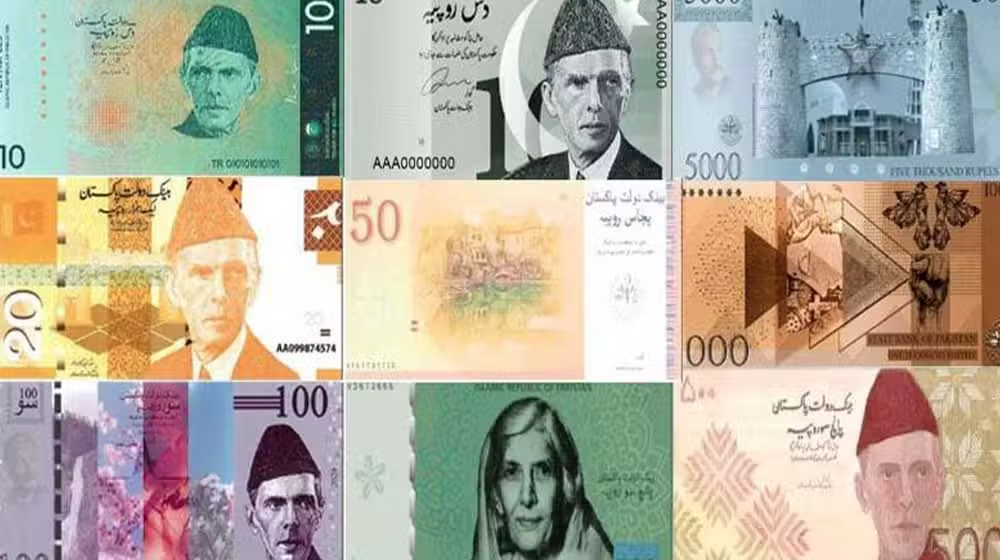
Pakistan’s new currency notes have been under development for nearly two years, but approval delays, design revisions and multiple government reviews continue to hold up the process.
Pakistan is preparing to introduce a redesigned series of new currency notes, but the project has faced a lengthy approval process. The State Bank of Pakistan (SBP) recently told the Senate Standing Committee on Finance that work on the designs has been continuing for around two years.
According to officials, the proposed designs were submitted to the Ministry of Finance approximately one year ago. However, the ministry had not yet responded to the proposals, leaving the process incomplete.
The situation has raised questions about why a currency redesign is taking so long and when Pakistanis can expect to see the new currency notes in circulation.


Why Are New Currency Notes Being Introduced?
The State Bank of Pakistan periodically reviews the country’s currency system to ensure that banknotes remain secure, durable and suitable for modern financial requirements.
The proposed new currency notes are expected to feature enhanced security measures. These features are intended to make counterfeiting more difficult and help authorities protect the integrity of Pakistan’s currency.
Currency modernization is not simply a matter of changing colors or portraits. A new banknote series requires extensive design work, security testing, technical specifications, printing arrangements and regulatory approvals.
For a country the size of Pakistan, the process also involves preparing millions of notes and ensuring that commercial banks, ATMs, businesses and consumers can smoothly transition to the new series.
For official information about Pakistan’s currency and monetary policies, readers can visit the State Bank of Pakistan.
1. The Designs Were Submitted but Approval Is Still Pending
One of the biggest reasons behind the delay is that the proposed designs have reportedly been waiting for government-level feedback.
SBP officials told the Senate committee that the designs were sent to the Ministry of Finance about a year ago. However, the ministry had not yet responded at the time of the committee meeting.
This means that although the central bank has spent significant time developing the proposed new currency notes, the project cannot move forward completely until the necessary approvals are secured.
The situation demonstrates how multiple institutions can affect the timeline of a major currency project.
2. Cabinet Review Has Changed the Designs
The approval process has also involved a federal cabinet committee.
SBP officials informed lawmakers that the cabinet had already made changes to the proposed designs. A further subcommittee is currently reviewing the proposals.
Design revisions are not unusual when introducing a new banknote series. Government authorities may request changes related to national symbols, security elements, visual presentation or other considerations.
However, each revision can add additional time to the process.
If the latest review results in substantial changes, the new currency notes could once again need to pass through additional approval stages.
3. Security Features Are a Major Part of the Project
Security is one of the most important considerations when designing modern banknotes.
The proposed new currency notes are expected to contain enhanced security features aimed at preventing counterfeiting.
Modern banknotes can incorporate several technologies, including security threads, watermarks, color-changing elements, microprinting and other specialized features.
The exact features planned for Pakistan’s redesigned notes have not all been publicly detailed, but SBP officials have confirmed that stronger security is one of the objectives of the project.
This is particularly important because counterfeit currency can create financial losses for businesses and individuals while undermining confidence in the monetary system.
The International Monetary Fund provides broader information and research on monetary and financial systems around the world.
4. Multiple Government Bodies Are Involved
Another factor contributing to the lengthy process is the number of stakeholders involved.
Although the State Bank is responsible for currency management and issuance, major changes to banknotes can require coordination with other government institutions.
The current process involves the SBP, the Ministry of Finance, a federal cabinet committee and another subcommittee reviewing the designs.
Each institution may have its own requirements and recommendations.
This multi-level review can help ensure that the final banknotes meet government expectations, but it can also make the approval process considerably longer.
For the latest official government financial announcements, the Ministry of Finance Pakistan is a useful reference.
5. Further Changes Could Restart the Approval Process
The biggest concern now is that the process could take even longer if additional changes are made.
SBP officials indicated that further modifications to the proposed designs could require them to go through the approval process again.
That creates a potential cycle:
Design → Review → Changes → New Review → Approval → Production
If another committee requests substantial revisions, the central bank may have to repeat some of the earlier stages.
This is one reason the introduction of the new currency notes does not currently have a firm public launch date.
6. Senate Committee Raises Questions Over the Delay
The prolonged process also attracted criticism from lawmakers.
Senator Saleem Mandviwalla, chairman of the Senate Standing Committee on Finance, questioned why the project had taken so long.
He reportedly noted that the process had continued for so many years that the committee’s own term could potentially end before the redesigned notes are issued.
The senator also questioned the process used to select the consultant involved in developing the designs.
These questions add political pressure to a project that has already been under development for an extended period.

7. There Is Still No Confirmed Launch Date
Despite two years of development, Pakistan does not yet have a confirmed public launch date for the new currency notes.
The designs must first complete the necessary reviews and receive final approval.
Only after that can the State Bank proceed with the technical and production stages required before the notes enter circulation.
This means Pakistanis should not expect the redesigned notes to appear immediately.
The timeline will depend heavily on how quickly the remaining government reviews are completed and whether additional changes are requested.
What Will Change With the New Currency Notes?
The final appearance and denomination-specific designs have not been fully confirmed publicly.
However, the central objective is expected to be improved security.
A redesigned currency series could also provide an opportunity to modernize the visual identity of Pakistani banknotes.
Currency design plays an important role in national identity. Countries around the world frequently use new banknote series to showcase important historical figures, cultural landmarks, national achievements and other symbols.
For Pakistan, the new series could therefore combine improved security technology with updated visual designs.
Will Existing Currency Notes Become Invalid?
The current information does not indicate that existing Pakistani currency will immediately become invalid when redesigned notes are introduced.
Normally, central banks provide transition periods when replacing a currency series. Old notes may continue circulating alongside new notes for a period before being gradually withdrawn.
However, the exact procedure for Pakistan’s new currency notes will depend on the official policy announced by the SBP.
Consumers should therefore rely on official State Bank announcements rather than social media claims about the withdrawal of existing banknotes.
How the New Currency Notes Could Help Fight Counterfeiting
Counterfeit currency remains a concern for monetary authorities because fake notes can be difficult for ordinary consumers to identify.
Enhanced security technology can make counterfeit production more difficult and provide banks, retailers and consumers with more ways to verify genuine notes.
A modern banknote can contain security elements that are difficult to reproduce using conventional printing equipment.
However, technology alone cannot completely eliminate counterfeiting.
Public awareness is also important. Consumers and businesses need to know how to identify legitimate security features and what steps to take if they receive a suspicious note.
What Happens After Final Approval?
Once the designs receive final approval, several important steps will remain before Pakistanis receive the new currency notes.
These could include:
- Finalizing technical specifications
- Preparing printing plates and security elements
- Producing test samples
- Conducting quality and security checks
- Beginning large-scale printing
- Distributing notes through the banking system
- Gradually introducing the notes into circulation
The State Bank will also need to coordinate with commercial banks and other financial institutions.
ATMs and cash-handling systems may require adjustments depending on the size and specifications of the new notes.
Businesses that regularly process large volumes of cash could also need to update their currency-handling procedures.
Impact on Pakistani Consumers
For ordinary Pakistanis, the introduction of new banknotes could initially create some confusion.
People may need time to become familiar with the new designs and security features.
Banks and government agencies would therefore likely need to conduct awareness campaigns explaining how to distinguish genuine notes from counterfeit ones.
The transition could also provide an opportunity to educate the public about responsible cash handling and currency security.
However, until the SBP officially announces the final designs and circulation schedule, consumers do not need to take any special action.
Pakistan’s Wider Financial Modernization
The proposed new currency notes are part of a broader conversation about modernizing Pakistan’s financial system.
The country has increasingly moved toward digital payments, mobile banking and electronic transactions. At the same time, cash remains extremely important for millions of consumers and businesses.
This means Pakistan’s monetary system must continue supporting both traditional cash payments and emerging digital financial services.
The redesigned banknotes could therefore represent one component of a wider modernization effort.
You can also read our related coverage on Pakistan’s new virtual asset licensing framework and Pakistan’s electricity distribution reforms.
What Pakistanis Should Watch Next
The most important development to watch is the completion of the government review.
If the current designs receive approval without major changes, the SBP could move toward the production phase.
If additional revisions are requested, however, the timeline could be extended further.
The State Bank will eventually need to communicate the final designs, security features, denominations and transition arrangements to the public.
Until then, reports about exact release dates or specific designs should be treated cautiously unless confirmed by official authorities.
Final Thoughts
Pakistan’s new currency notes project has been in development for around two years, but the rollout remains delayed because of government reviews, design changes and pending approvals.
The State Bank has already developed proposed designs and submitted them for consideration, while enhanced security remains a key objective.
The latest Senate committee discussion has brought renewed attention to the delays and raised questions about the approval and consultancy process.
For now, the biggest unknown is when the final designs will be approved and when the new notes will actually enter circulation.
The project could eventually deliver more secure and modern banknotes, but its success will depend not only on the quality of the designs but also on how efficiently the remaining approval, production and distribution stages are completed.
New Currency Notes: Quick Facts
| Feature | Current Status |
|---|---|
| Development period | Around 2 years |
| Designs | Under review |
| Ministry of Finance response | Awaited |
| Cabinet review | Changes already made |
| Security | Enhanced features planned |
| Further revisions | Possible |
| Production | Not yet confirmed |
| Public launch date | Not announced |