

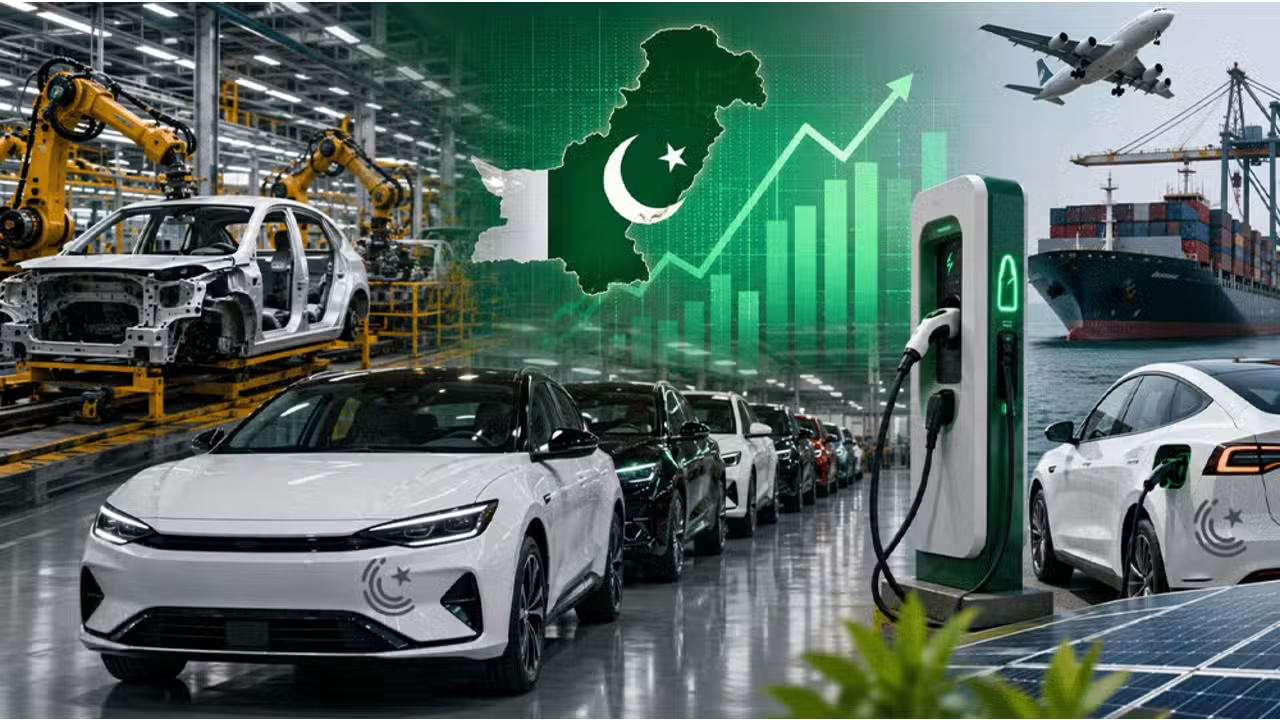

Pakistan Industrial Policies covering automobiles, batteries, electronics, solar manufacturing and energy storage are still awaiting formal government approval, according to a document from the Ministry of Industries and Production.
The delay means implementation of the proposed policy frameworks has not yet begun. The policies are intended to provide direction for important manufacturing sectors, encourage domestic production, support investment and strengthen Pakistan’s industrial base.
According to the latest information, the Engineering Development Board (EDB) prepared the initial policy drafts after consultations with manufacturers, industry associations, investors, technology experts and other stakeholders.
Table of Contents
What Is the Status of Pakistan Industrial Policies?
The federal government has yet to approve several proposed industrial policy frameworks, leaving their implementation on hold.
The Ministry of Industries and Production document states that work on implementation has not started because approval by the competent forum remains pending.
The delay is significant because these policies are expected to establish clearer rules and targets for industries that could play an important role in Pakistan’s manufacturing and technology sectors.
The ministry has indicated that measurable targets and other details will be disclosed once the respective policies receive formal approval.
For official information about existing and proposed industrial policies, readers can visit the Ministry of Industries and Production.
Which Industries Are Waiting for Approval?
The proposed frameworks cover several strategic areas of the economy.
These include:
- Automobiles
- Batteries
- Electronics
- Solar manufacturing
- Energy storage
Together, these industries are connected to manufacturing, electric mobility, renewable energy, technology development, employment and import substitution.
The government has already published policies for some related sectors, including the New Energy Vehicles Policy 2025–30, while other frameworks remain under development or approval.


Who Prepared the Policy Frameworks?
The Engineering Development Board, an attached department of the Ministry of Industries and Production, was tasked with preparing the initial policy drafts.
The EDB worked with stakeholders from the relevant industrial and technology sectors to develop the proposals.
Consultations involved industry associations, manufacturers, investors, technology specialists and other stakeholders.
The consultation process was intended to identify industry challenges, understand investment requirements and develop measures that could support long-term industrial growth.
The Ministry of Industries and Production has previously highlighted the importance of stakeholder consultation in the development of the country’s industrial policies.
Why the Policies Matter for Pakistan
A clear industrial policy can provide businesses with greater visibility about future regulations, incentives, tariffs, localization requirements and investment opportunities.
For Pakistan, the proposed policies are particularly relevant because several of the targeted sectors are closely linked to reducing import dependence.
Domestic manufacturing can potentially help develop local supply chains while creating opportunities for technology transfer and skilled employment.
The government has also stated that strengthening local manufacturing, increasing exports and creating employment are important industrial objectives.
Automobile Industry Policy
Pakistan’s automobile sector is one of the most important areas covered by the proposed policy changes.
The government has been working on a new framework aimed at strengthening local manufacturing and increasing localization of auto parts.
Earlier this year, the Ministry of Industries and Production said the upcoming auto policy would focus strongly on locally manufactured parts and could provide protection for components already produced domestically as well as parts with potential for local manufacturing.
The transition toward electric vehicles is another major consideration.
Pakistan’s existing New Energy Vehicles Policy 2025–30 focuses on developing the country’s electric mobility ecosystem and increasing local manufacturing capacity.
A finalized automobile policy could therefore influence manufacturers, parts suppliers, investors and consumers.
Battery and Energy Storage Policy
Battery manufacturing and energy storage are becoming increasingly important as electric vehicles and renewable energy expand.
The government has previously discussed developing an EV Battery Policy and encouraging investment in battery manufacturing and advanced energy storage technologies.
Officials have highlighted potential investment in lithium-ion and sodium-ion battery technologies, with the aim of supporting both electric vehicles and wider energy-storage applications.
The proposed policy could eventually provide a framework for local battery production, technology transfer and investment.
This is particularly important for Pakistan as the country explores ways to expand electric mobility and renewable energy.
Electronics Manufacturing Policy
Pakistan is also working to expand domestic electronics manufacturing.
The Ministry of Industries and Production has previously announced work on a Mobile Device and Electronics Manufacturing Policy 2026–33.
The Engineering Development Board prepared the framework with the objective of promoting large-scale local manufacturing of mobile phones and electronic devices while strengthening exports.
A broader electronics policy could help manufacturers establish local production and encourage investment in related supply chains.

Solar Manufacturing Policy
Solar manufacturing is another area included among the proposed industrial frameworks.
The sector has become increasingly important as businesses and households look toward renewable energy and alternative electricity sources.
A dedicated manufacturing framework could potentially encourage investment in locally produced solar equipment and related components.
It could also support the development of domestic supply chains instead of relying heavily on imported equipment.
The proposed solar and energy-storage measures are therefore closely connected to Pakistan’s broader manufacturing and energy goals.
Expected Industrial Benefits
If the proposed Pakistan Industrial Policies are approved and implemented effectively, several benefits could emerge.
1. More Local Manufacturing
Policy support could encourage companies to manufacture more components inside Pakistan.
This would help expand domestic industrial capacity.
2. Reduced Import Dependence
Producing more goods locally could reduce the need to import certain finished products and components.
3. Technology Transfer
Foreign investment and partnerships could introduce advanced manufacturing technologies and technical expertise.
4. Employment Generation
Expansion of manufacturing facilities and supply chains could create jobs for engineers, technicians and other skilled workers.
5. Export Opportunities
A stronger manufacturing base could allow Pakistani companies to target regional and international markets.
6. Investment Growth
Clear and predictable policy frameworks can make it easier for investors to assess long-term opportunities.
7. Support for Emerging Industries
Electric vehicles, batteries, renewable energy and electronics are rapidly evolving industries. Policy support could help Pakistan participate more actively in these markets.


What Happens After Approval?
Once the proposed policies receive formal approval, the Engineering Development Board is expected to oversee their implementation.
The board will also monitor progress and periodically review the policies.
However, several measurable targets are still being evaluated.
These targets are expected to cover areas such as:
- Domestic manufacturing
- Exports
- Technology transfer
- Employment generation
- Import substitution
The ministry has stated that these targets, along with additional details of the policy frameworks, will be made public after formal approval.
This means businesses and investors may need to wait for the final versions before making decisions based on specific incentives or requirements.
What Businesses Should Watch
Manufacturers and investors in the affected sectors will be closely watching the government’s next steps.
For automobile companies, localization requirements and the treatment of locally produced parts could be particularly important.
For battery manufacturers, the regulatory environment could influence investment decisions and technology partnerships.
Electronics companies may focus on manufacturing incentives and export opportunities.
Solar manufacturers and energy-storage businesses, meanwhile, will be interested in policies that could encourage domestic production and investment.
The government’s final policy documents will therefore be important for determining how these industries develop over the coming years.
Pakistan Industrial Policies and the Road Ahead
The delay does not necessarily mean the proposed frameworks have been abandoned.
Government agencies have continued working on several industrial initiatives during 2026.
The Ministry of Industries and Production’s current policy listings include the New Energy Vehicles Policy 2025–30, while its recent announcements show continued work on automobile, battery and electronics manufacturing frameworks.
The key issue now is formal approval.
Until the policies are approved, businesses have limited certainty about the final targets, incentives and implementation mechanisms.
Final Takeaway
Pakistan’s proposed industrial policies for automobiles, batteries, electronics, solar manufacturing and energy storage remain awaiting approval, according to the latest Ministry of Industries and Production document.
The Engineering Development Board has prepared the policy drafts following consultations with industry stakeholders, while implementation has not yet started because approval from the competent forum is still pending.
The eventual policies could have a significant impact on Pakistan‘s manufacturing landscape.
They could encourage localization, attract investment, support technology transfer, generate employment and strengthen export capacity.
However, the final impact will depend on the details of the approved frameworks and how effectively they are implemented.
For now, the next major milestone is government approval of the proposed Pakistan Industrial Policies. Once approved, the publication of detailed targets and implementation measures should give manufacturers and investors a clearer picture of the opportunities ahead.