


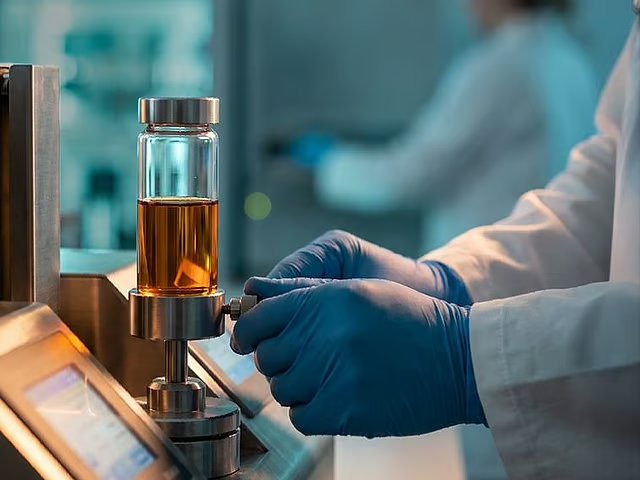
Dubai Municipality has introduced automated laboratory technology that dramatically speeds up oil and fat quality testing while increasing testing capacity by 900%.
Dubai Municipality has taken another step toward faster and more sustainable food safety testing with the introduction of advanced automated technology at the Dubai Central Laboratory.
The new system reduces the time required to test the quality of oils and fats from two hours to just two minutes, allowing authorities to analyse significantly more samples while maintaining accuracy and reliability.
Table of Contents

Dubai Municipality Oil and Fat Testing Now Takes Just 2 Minutes
The biggest change is the dramatic reduction in testing time.
Previously, oil and fat quality testing could take around two hours. With the new automated technology, the same analysis can now be completed in approximately two minutes.
The system performs the analysis automatically without requiring continuous human intervention. It can also help identify early indicators associated with oxidation and the quality of oils and fats during manufacturing and storage.
This faster process gives Dubai’s food-control authorities the ability to process more samples and identify potential quality concerns more quickly.
Testing Capacity Increases From 6 to 60 Samples
Another major advantage of the new Dubai Municipality oil and fat testing system is its increased capacity.
The Dubai Central Laboratory can now process up to 60 samples per day, compared with six samples previously. This represents a 900% increase in daily testing capacity.
The higher capacity is particularly important for food manufacturers, suppliers and regulatory authorities because a larger number of samples can be analysed within the same working period.
Faster Testing Supports Food Safety
Faster laboratory results can help regulators respond more efficiently when potential quality issues are identified.
Oil and fats can undergo oxidation during manufacturing and storage. Detecting quality indicators earlier allows authorities and industry professionals to investigate potential problems more quickly.
The technology therefore supports Dubai’s wider approach to proactive food control and consumer protection.
How the New Automated System Works
The technology is designed to automate the analysis process and generate results without the same level of manual intervention required by conventional testing methods.
This allows laboratory specialists to handle a greater number of samples while maintaining the accuracy and reliability required for food testing.
The system is also designed to support compliance with international standards and specifications.
Dubai Municipality Oil and Fat Testing Supports Green Laboratory Practices
The new system is not only about speed.
It also supports Dubai Central Laboratory’s move toward green laboratory practices by eliminating chemical consumables required by conventional testing methods.
Reducing the use of chemical consumables can improve resource efficiency and reduce the environmental impact associated with laboratory operations.
This means the laboratory can pursue faster testing while also supporting sustainability objectives.
What This Means for Food Businesses in Dubai
The development could be particularly useful for businesses involved in food manufacturing, storage and distribution.
Faster testing can help laboratories process larger numbers of samples, while automated results can support quicker decision-making when quality concerns arise.
For businesses, stronger testing capabilities can also contribute to greater confidence in product quality and compliance.
The new approach complements Dubai’s broader investment in technology-driven food safety and regulatory services.
Dubai Central Laboratory Expands Its Capabilities
Dubai Central Laboratory has continued developing its technical capabilities through advanced scientific and technological solutions.
According to Dubai Municipality, the new technology strengthens testing efficiency while maintaining the accuracy and reliability required for food safety and consumer protection.
The laboratory’s increased capacity also means that more food samples can be examined without requiring a proportional increase in testing time.
A Major Step for Dubai Food Safety
The introduction of faster Dubai Municipality oil and fat testing is another example of how automation can improve public-sector laboratory services.
Moving from a two-hour process to a two-minute analysis represents a substantial efficiency improvement. At the same time, increasing daily capacity from six to 60 samples gives regulators greater ability to monitor food quality across Dubai.
The technology also connects food safety with sustainability by reducing reliance on chemical consumables.
Why the New Testing Technology Matters
The upgrade delivers several important benefits:
- 2-minute testing instead of approximately two hours
- 900% increase in daily testing capacity
- Capacity rising from 6 to 60 samples per day
- Automated analysis with reduced human intervention
- Earlier detection of oil and fat oxidation indicators
- Reduced use of chemical consumables
- Support for green laboratory practices
- Continued compliance with international standards
- Stronger proactive food-control capabilities


Dubai’s Growing Focus on Smart Food Safety
The new Dubai Municipality oil and fat testing system reflects a wider shift toward automated and technology-driven regulatory services.
By reducing testing time and increasing laboratory capacity, Dubai can process more samples and respond faster to potential food-quality concerns.
The development also shows how digital and automated technologies can improve government laboratory operations without compromising accuracy or regulatory standards.
For official information about Dubai Municipality’s laboratory and food-safety services, visit the Dubai Municipality official website. The municipality has also published details of the new oil and fat testing technology.
Final Thoughts
The latest Dubai Municipality oil and fat testing upgrade cuts testing time from two hours to only two minutes while increasing daily laboratory capacity from six to 60 samples.
The 900% capacity increase could help Dubai strengthen food-quality monitoring, improve regulatory response times and provide greater protection for consumers.
At the same time, eliminating chemical consumables from the new testing process supports the Dubai Central Laboratory’s green laboratory ambitions.
Overall, the technology combines speed, automation, higher capacity and sustainability, making it an important development in Dubai’s food-safety infrastructure.