


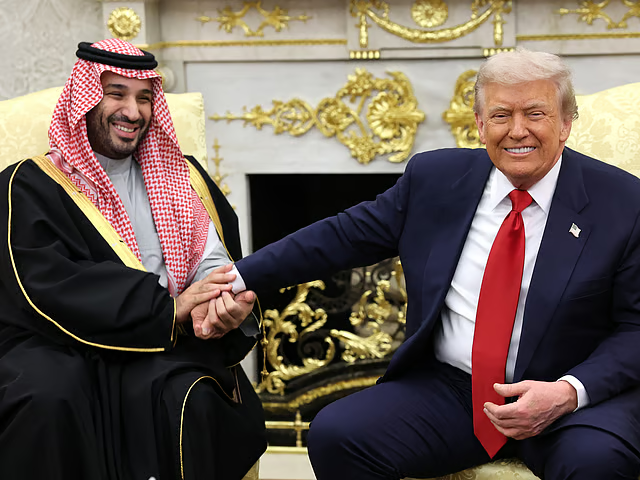
The proposed Saudi Nuclear Pact has returned to the global spotlight after U.S. President Donald Trump announced that any civilian nuclear agreement with Saudi Arabia would be conditional on the kingdom normalising diplomatic relations with Israel through the Abraham Accords.
Trump stated that while the United States supports Saudi Arabia’s peaceful civilian nuclear ambitions, the agreement would not permit uranium enrichment inside the kingdom. He also stressed that final approval of the deal depends on Saudi Arabia joining the Abraham Accords, the regional normalization initiative first introduced during his previous administration.
The announcement has reignited debate over Middle East diplomacy, nuclear non-proliferation, and the future of Saudi-Israel relations.
Table of Contents
What Is the Saudi Nuclear Pact?
The Saudi Nuclear Pact refers to a proposed agreement between the United States and Saudi Arabia that would allow the kingdom to develop a civilian nuclear energy program under American cooperation.
Saudi Arabia has long expressed interest in expanding its energy sector beyond oil by investing in nuclear power for electricity generation, water desalination, and long-term energy diversification.
The proposed agreement aims to support peaceful nuclear development while ensuring compliance with international non-proliferation standards.
However, the deal has remained politically sensitive because of concerns surrounding uranium enrichment and regional security.
Official U.S. Department of State
Trump Says Israel Normalisation Is a Key Requirement
According to President Donald Trump, the Saudi Nuclear Pact cannot move forward unless Saudi Arabia agrees to normalize diplomatic relations with Israel through the Abraham Accords.
In a statement shared on social media, Trump emphasized that the agreement would only support civilian nuclear facilities that do not include uranium enrichment.
He described the Abraham Accords as a successful diplomatic framework that has already expanded relations between Israel and several Arab nations.
By linking the nuclear agreement to regional diplomacy, the administration is attempting to strengthen both security cooperation and broader Middle East stability.
Why the Abraham Accords Are Central to the Saudi Nuclear Pact
The Abraham Accords were first introduced in 2020 to establish diplomatic relations between Israel and several Arab countries, including the United Arab Emirates and Bahrain.
If Saudi Arabia joins the accords, it would represent one of the most significant diplomatic developments in the Middle East in decades.
Saudi Arabia plays a central political, economic, and religious role in the region, making any normalization agreement especially important for regional stability and future cooperation.
Supporters believe such a move could improve trade, technology partnerships, tourism, investment, and security cooperation throughout the Middle East.
Official Abraham Accords information
Why Uranium Enrichment Remains the Biggest Concern
One of the most debated aspects of the Saudi Nuclear Pact is uranium enrichment.
Under Trump’s proposal, Saudi Arabia would be allowed to develop civilian nuclear facilities but would not receive permission to enrich uranium domestically.
Many international non-proliferation experts argue that uranium enrichment capabilities can potentially be expanded beyond civilian purposes if strict safeguards are not maintained.
For this reason, Washington continues to emphasize non-enriched civilian nuclear technology while supporting peaceful energy development.
International Reactions to the Saudi Nuclear Pact
The announcement surrounding the Saudi Nuclear Pact has attracted attention from governments, security analysts, and international organizations. Many observers believe the agreement could reshape diplomatic and strategic relationships across the Middle East, while others argue that strict safeguards will be essential to prevent future nuclear risks.
Supporters of the proposal say a civilian nuclear partnership could strengthen long-term cooperation between Washington and Riyadh while helping Saudi Arabia diversify its energy sources under its economic transformation plans. Expanding peaceful nuclear energy could also reduce dependence on fossil fuels and support growing electricity demand.
At the same time, non-proliferation experts continue to stress that any agreement must include transparent inspections and oversight. They argue that preventing uranium enrichment is a critical safeguard that helps ensure civilian nuclear technology cannot be diverted toward military purposes.
International organizations, including the International Atomic Energy Agency (IAEA), are expected to play an important role in monitoring compliance if the agreement moves forward.
Why the Saudi Nuclear Pact Matters for the Middle East
The proposed Saudi Nuclear Pact extends far beyond energy cooperation. It has the potential to influence regional diplomacy, economic partnerships, and security arrangements for years to come.
For Saudi Arabia, the agreement could support the country’s long-term strategy to diversify its economy and develop advanced energy infrastructure as part of Vision 2030. Civilian nuclear power would complement renewable energy projects while helping meet rising domestic electricity demand.
For the United States, the deal represents an opportunity to strengthen strategic ties with one of its most important Middle Eastern partners while encouraging broader regional stability through diplomatic engagement.
For Israel, linking the agreement to the Abraham Accords could mark another historic milestone in expanding diplomatic relations with Arab nations. If Saudi Arabia were to normalize relations with Israel, it would represent one of the most significant geopolitical developments in decades.
Many analysts believe such cooperation could improve regional investment, technology partnerships, trade, tourism, and security coordination.


What Happens Next?
Although President Donald Trump has outlined the conditions for the Saudi Nuclear Pact, the agreement is still subject to further negotiations and political approval.
Officials from both countries will need to finalize technical details, legal frameworks, and international safeguards before any final agreement can be implemented. Congressional review in the United States, along with continued diplomatic discussions between Saudi Arabia and regional partners, will likely influence the timeline.
Another key factor is whether Saudi Arabia decides to join the Abraham Accords. While Riyadh has previously expressed support for regional peace efforts, it has also linked normalization with Israel to broader developments concerning the Palestinian issue.
As negotiations continue, governments, investors, and international observers will closely monitor any announcements that could shape the future of Middle East diplomacy and civilian nuclear cooperation.
final Thoughts
The proposed Saudi Nuclear Pact represents far more than a civilian nuclear agreement. It combines energy policy, international diplomacy, regional security, and economic cooperation into one of the most closely watched geopolitical developments of 2026.
President Donald Trump’s insistence that Saudi Arabia normalize relations with Israel through the Abraham Accords before the agreement proceeds adds another significant diplomatic dimension to the negotiations. At the same time, restrictions on uranium enrichment reflect continued international concerns about nuclear non-proliferation.
Whether the agreement ultimately moves forward will depend on future negotiations, international safeguards, and political decisions from all parties involved. If approved, the pact could redefine strategic partnerships across the Middle East and influence regional stability for years to come.


