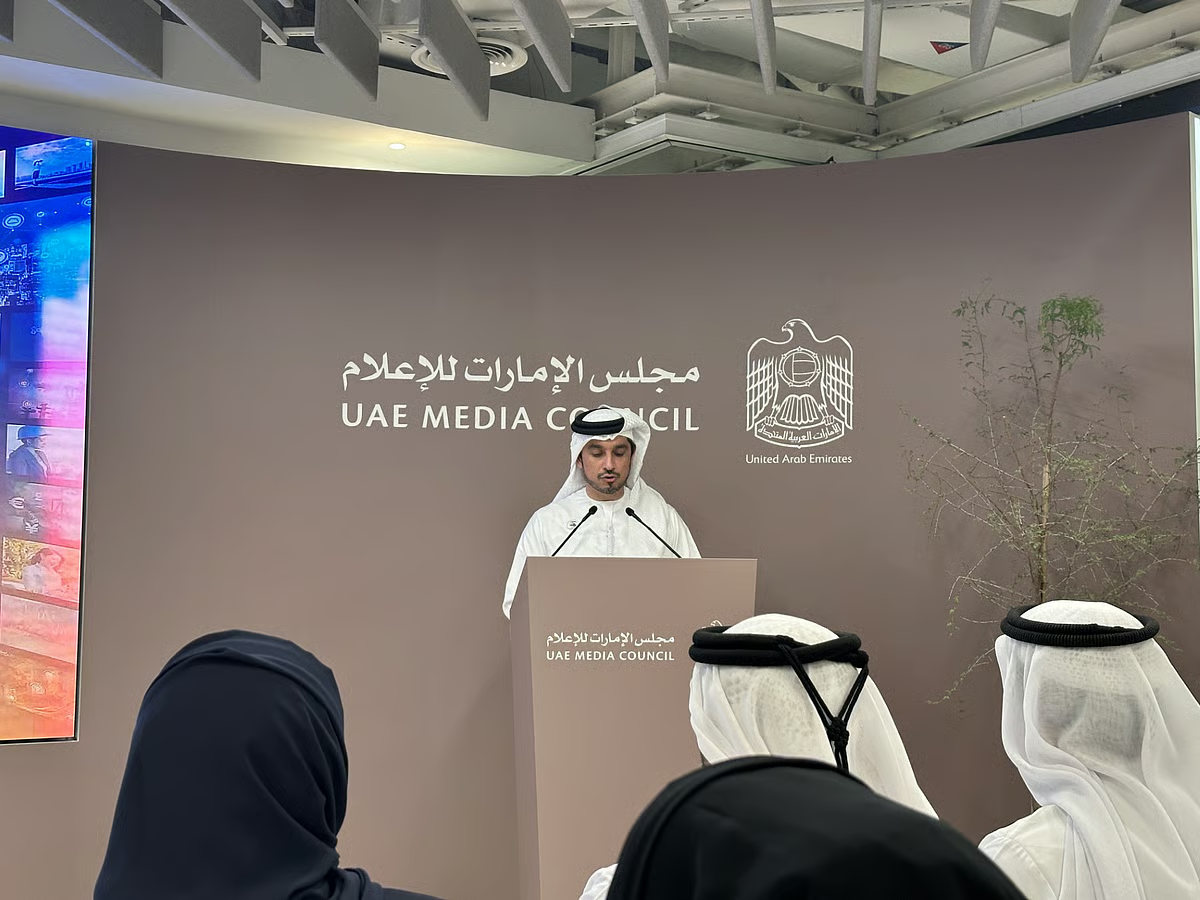



The milestone of 1,000 Days of UAE Humanitarian Support reflects the UAE’s sustained relief efforts for Palestinians in Gaza during a prolonged and devastating humanitarian crisis.
Since the launch of Operation Chivalrous Knight 3 in November 2023, the UAE has continued delivering humanitarian assistance through multiple channels, focusing on essential needs such as food, medicine, water, healthcare, shelter, and other forms of civilian support.
The initiative was launched under the directives of Sheikh Mohamed bin Zayed Al Nahyan, President of the UAE, as part of the country’s wider humanitarian response to the crisis in Gaza.
Over the course of 1,000 days, the UAE says its relief efforts have continued despite significant logistical, political, and operational challenges.
Table of Contents
1,000 Days of UAE Humanitarian Support
The completion of 1,000 days represents a significant milestone in the UAE humanitarian response to the Palestinian crisis.
According to the supplied figures, the UAE’s assistance to Gaza has exceeded $3.12 billion, while relief supplies have surpassed 125,000 tonnes of food, medical materials, and shelter necessities.
The UAE says its humanitarian operations have been designed to provide sustained support rather than relying solely on short-term emergency deliveries.
This approach has included direct assistance to civilians as well as support for healthcare facilities, food production, water infrastructure, and other essential services.
The central objective has remained the delivery of life-saving assistance to people affected by the conflict and the deterioration of essential services.
Operation Chivalrous Knight 3 and Its Mission
Operation Chivalrous Knight 3, also known as Operation Gallant Knight 3, represents the UAE’s broader humanitarian response to the crisis in Gaza.
The operation has focused on providing essential supplies and services to civilians facing shortages of food, medicine, clean water, shelter, and healthcare.
The UAE has described the operation as a comprehensive humanitarian effort involving medical assistance, food distribution, water support, and infrastructure-related projects.
The initiative has also involved cooperation with international humanitarian organisations working to deliver assistance to people in need.
Humanitarian Aid Through Land, Air and Sea
One of the defining elements of the UAE’s humanitarian response has been the use of multiple delivery channels.
Relief supplies have been transported through land, air, and sea routes, allowing humanitarian assistance to reach Gaza through different logistical pathways.
The assistance has included food supplies, medical materials, shelter necessities, and other essential items required during an emergency.
Maintaining humanitarian supply chains during an active conflict presents major logistical challenges. For this reason, the continued movement of relief supplies over an extended period has become a central part of the operation.
The UAE’s approach has focused on maintaining continuity in humanitarian assistance while responding to changing needs on the ground.
Healthcare, Food and Water Assistance

Healthcare has remained one of the most important areas of humanitarian support.
The UAE’s assistance has included medical supplies and support for healthcare facilities serving Palestinians affected by the crisis. Medical assistance is particularly important when hospitals and health services face shortages of equipment, medicines, and other essential resources.
Food security has also been a major priority.
The humanitarian response has included food supplies as well as support for bakeries and central kitchens intended to provide meals to people facing severe shortages.
Water assistance has formed another important part of the response. Projects involving water pipelines and desalination facilities have aimed to improve access to clean water in areas where water infrastructure has been severely affected.
Infrastructure and Community Support
The UAE humanitarian response has extended beyond the delivery of emergency supplies.
According to the supplied information, projects have included bakeries, hospitals, infrastructure rehabilitation, water pipelines, desalination facilities, central kitchens, and education support.
These initiatives are intended to help restore essential services and provide communities with resources that remain important beyond immediate emergency relief.
Support for education is also significant because prolonged crises can disrupt children’s access to learning and create long-term social consequences.
The UAE has additionally supported community-focused initiatives intended to strengthen social resilience among Palestinians affected by the conflict.
UAE Aid Contribution to Gaza
The scale of the UAE’s contribution has attracted attention because of the amount of aid delivered during the crisis.
According to figures cited in the supplied report, UAE assistance represents 46% of total international aid delivered to Gaza.
The country’s total humanitarian assistance has reportedly exceeded $3.12 billion, with relief supplies surpassing 125,000 tonnes.
These figures include food, medical supplies, shelter materials, and other forms of humanitarian assistance.
The scale of the response highlights the UAE’s emphasis on maintaining a sustained humanitarian presence rather than limiting assistance to isolated relief campaigns.
A Long-Term Humanitarian Commitment
The 1,000-day milestone also highlights the importance of long-term humanitarian assistance during extended crises.
Humanitarian emergencies can continue for months or years, creating needs that go beyond food and emergency medical treatment. Communities also require access to clean water, functioning healthcare services, education, food preparation facilities, and basic infrastructure.
Operation Chivalrous Knight 3 has attempted to address several of these areas through a combination of emergency relief and longer-term support projects.
The UAE’s humanitarian response forms part of its broader history of international aid and disaster-relief initiatives.
As the humanitarian situation in Gaza continues to evolve, sustained international assistance remains essential for civilians who require food, healthcare, water, shelter, and other basic necessities.
Frequently Asked Questions
What is Operation Chivalrous Knight 3?
Operation Chivalrous Knight 3, also known as Operation Gallant Knight 3, is a UAE humanitarian relief operation supporting Palestinians in Gaza with food, medicine, healthcare, water, shelter, and other essential assistance.
How long has the UAE humanitarian operation continued?
According to the supplied report, the operation reached the milestone of 1,000 days of continuous humanitarian action.
How much humanitarian aid has the UAE provided to Gaza?
The supplied figures state that UAE humanitarian assistance has exceeded $3.12 billion, with relief supplies surpassing 125,000 tonnes.
What types of assistance has the UAE provided?
The response has included food, medical supplies, shelter materials, water assistance, healthcare support, infrastructure rehabilitation, bakeries, central kitchens, desalination facilities, and education-related support.
Why is water assistance important in Gaza?
Access to safe water is essential during humanitarian crises. Damage to infrastructure and shortages can make clean water difficult to obtain, increasing risks to public health and daily life.
Final Thought
The milestone of 1,000 Days of UAE Humanitarian Support represents a sustained humanitarian response to the needs of Palestinians in Gaza.
Through Operation Chivalrous Knight 3, the UAE has provided assistance covering food, medicine, healthcare, water, shelter, infrastructure, and other essential services.
The reported $3.12 billion in aid and more than 125,000 tonnes of relief supplies demonstrate the scale of the UAE’s contribution described in the supplied report.
As humanitarian needs continue to evolve, sustained relief efforts remain critical for protecting civilian lives and supporting access to essential services.
The 1,000-day milestone therefore represents not only the duration of the operation but also the continuing importance of humanitarian assistance during prolonged crises.