


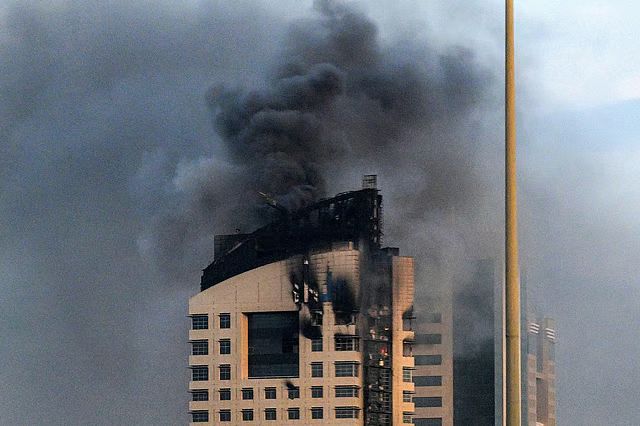
As the US-Iran conflict stretched into its fifth month, one lesson has become increasingly clear: War vs Diplomacy remains at the heart of the region’s future.
While Washington initially expected a short conflict and rapid diplomatic breakthroughs, Gulf nations consistently emphasized dialogue, de-escalation, and regional stability. Their approach focused on protecting global trade, maintaining freedom of navigation, and preventing the conflict from expanding across the Middle East.
As the crisis evolved, many of the priorities championed by Gulf leaders proved more resilient than several early expectations surrounding the conflict.
Table of Contents
Why War vs Diplomacy Became the Central Debate
The prolonged US-Iran conflict transformed War vs Diplomacy from a political discussion into one of the region’s most significant strategic challenges.
Early predictions suggested military operations would quickly force negotiations and reduce regional tensions. Instead, months of continued hostilities demonstrated how difficult it is to achieve lasting political outcomes through military action alone.
Throughout the crisis, Gulf countries consistently argued that diplomacy remained essential for preventing further instability. Rather than supporting prolonged escalation, regional governments focused on encouraging negotiations while protecting economic interests and regional security.
Their position reflected concerns that any disruption could threaten international energy markets, commercial shipping, and broader Middle Eastern stability.
Gulf Cooperation Council (GCC)

Gulf States Continued to Prioritize Diplomacy
Throughout the conflict, Gulf governments repeatedly emphasized diplomatic engagement instead of military escalation.
Countries including Saudi Arabia, the United Arab Emirates, Qatar, Oman, and other Gulf Cooperation Council members consistently called for restraint while encouraging political dialogue between all parties.
Oman continued facilitating indirect diplomatic contacts, while regional leaders stressed that maintaining communication remained essential for reducing tensions. Their approach reflected a long-term strategy centered on conflict prevention rather than confrontation.
This consistent diplomatic position helped reinforce the Gulf’s role as an important regional mediator while supporting international efforts aimed at restoring stability.
United Nations Peace and Security
The Strait of Hormuz Remained Central to the Crisis

One of the most important aspects of the War vs Diplomacy debate has been the security of the Strait of Hormuz, one of the world’s busiest maritime trade routes. A significant portion of global oil and liquefied natural gas exports passes through this narrow waterway, making it vital to international energy markets.
Throughout the conflict, Gulf states consistently emphasized that freedom of navigation must remain protected under international law. Regional leaders warned that any disruption to commercial shipping could have far-reaching consequences, affecting global energy supplies, international trade, and economic stability.
As military tensions increased, Gulf governments continued calling for restraint while stressing the importance of keeping shipping lanes open. Their position reflected long-standing concerns that prolonged instability in the Strait of Hormuz would impact not only the Middle East but also economies around the world.
International Maritime Organization (IMO)
Why the Conflict Lasted Longer Than Expected
Early expectations suggested that the confrontation would end within weeks. However, the conflict continued for several months, highlighting the complexity of regional geopolitics and the limitations of relying solely on military pressure.
Despite periods of reduced fighting and temporary diplomatic efforts, negotiations repeatedly stalled while hostilities resumed. The prolonged crisis demonstrated that achieving a lasting political settlement requires sustained dialogue alongside security measures.
Analysts also noted that both sides maintained strategic objectives that proved difficult to reconcile, extending the duration of the conflict far beyond initial forecasts. As a result, regional governments continued advocating diplomatic engagement as the most practical path toward reducing tensions.
United Nations:
https://www.un.org/
Final Thoughts
The ongoing War vs Diplomacy debate has highlighted the importance of balancing security concerns with diplomatic engagement. While military strategies evolved throughout the conflict, Gulf states largely maintained a consistent focus on dialogue, regional stability, and protecting international shipping routes.
Their emphasis on diplomacy, freedom of navigation, and de-escalation reflects a broader commitment to preventing wider regional instability while safeguarding global economic interests. As the situation continues to evolve, these priorities remain central to discussions about the future of security and cooperation in the Gulf.


